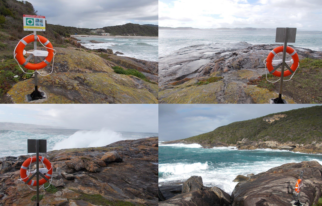
Make sure you come home safe if you choose to fish from the rocks this winter

With rougher conditions settling in over the winter months and large swells becoming more frequent, land-based fishers need to put their safety first if wetting a line off the rocks.  

The reminder comes a year on from a fisher who narrowly escaped drowning after being washed off the rocks in heavy swell at Quobba – conditions that really should have ruled out fishing in such an exposed location.  

If it was not for one of Recfishwest’s angel rings thrown to the stricken fisher and a passing vessel, the incident could have added to the tragic tally of rock fishing deaths in WA.  

The lucky fisher learned the hard way that fishing from rock platforms in heavy swell comes with big risks.  

This means taking all precautions before even deciding to set out for a rock fishing session and if you still choose to go ahead, using all safety gear and precautions once on the stones.  

This applies whether it be on the Gascoyne, Mid-West, South-West or Southern coastlines.  

CLICK HERE FOR OUR ROCK FISHING SAFETY GUIDE

Wear a lifejacket when you fish from the stones 

Wearing a lifejacket significantly increases your chances of survival when rock fishing and even if you don’t have your own, there are loan lifejackets available at outlets across WA through Recfishwest’s Fish and Survive program. 

These lifejackets are light enough to barely notice them while you’re fishing – yet will become your best friend if you end up in the water and need to stay afloat.  

If you don’t have a lifejacket, you can loan one for free at any of the store locations listed below. 

Even seasoned and skilled land-based fishers – such as Gideon Mettam and Chris Dixon – always wear lifejackets when rock fishing, regardless of the conditions.  

Chris Dixon, following a dangerously close shave with a rogue wave in his youth that saw $4,000 worth of gear lost – and nearly his life – said he won’t make the mistake of not wearing a lifejacket again.  

“I had no lifejacket on that day and I’m certain I wouldn’t have been able to get out of where I was or make it far enough swimming to reach safety. If I had gone in that day, I am certain I wouldn’t be here now,” said Chris. 

Recfishwest’s latest TV and radio commercials encourage fishers to stick to the beaches when chasing salmon this Easter

As thousands of fishers are heading to WA’s Southern and South-West coasts this Easter to chase massive schools of migrating salmon, Recfishwest is urging fishers to “keep the sand between their toes” by fishing from beaches rather than rocks.

Recfishwest as part of its Fish and Survive Program, funded by the Recreational Fishing Initiatives Fund, is running a major public awareness campaign to promote safe salmon fishing, including a TV commercial featuring Western Angler Editor and fishing personality Scott Coghlan. Check out this video below!

The Easter holiday period marks a migration of thousands of families to chase WA salmon on their famous spawning run eager to throw in a line at large schools of the iconic sportfish.

Recfishwest and Scott are encouraging people to fish from WA’s spectacular southern beaches for a greater chance of catching salmon, with none of the risks associated with fishing off the rocks.

As Scott says in the commercial, “You’ve actually got more chance of catching a salmon from the beach than the rocks and it’s a whole lot safer.”

The ads are running on regional television and on social media and are part of Recfishwest’s Fish and Survive salmon campaign, which also includes ads on local radio, in regional newspapers and through Recfishwest’s own channels, viewed collectively by hundreds of thousands of fishers.

Recfishwest CEO Dr Andrew Rowland said, “Every year we see a migration of thousands of families and mates to our southern coastline around Easter eager to chase the migration of these iconic sportfish. Often, they are fishing in places they are not wholly familiar with.

“That’s why we’re promoting safe salmon fishing as much as we can through multiple channels and outlets to enable the cast of thousands to make good decisions about where they choose to fish and ensure everyone comes home safe after a day’s fishing.”

Recfishwest is also working with the Bureau of Meteorology to send out rock fishing alerts through our channels when periods of high swell and poor weather conditions are forecast.

We encourage anyone considering fishing off the rocks to look out for these alerts on our Facebook and Instagram platforms and through our weekly fishing reports.

As demonstrated by Western Angler’s Scott Coghlan and Recfishwest CEO Dr Andrew Rowland, you have better odds of catching salmon on our world-class beaches and this is much safer option than the rocks.

Rock fishing safety precautions

Recfishwest recommends fishers do the following if choosing to fish from the rocks:

Always wear a lifejacket

Fish with a friend and look out for each other

Analyse the conditions on arrival before fishing

Wear appropriate clothing and footwear

Avoid fishing on black or wet rocks

Be familiar with public safety equipment such as angel rings and rock anchor points

Plan ahead and tell someone your plans

If you can’t swim, we strongly advise you to stay off the rocks because no fish is worth risking your life for.

Recfishwest continues to promote and support free loan lifejackets at 24 locations around Western Australia, while also implementing the deployment of rock anchor points and more than 80 angel floatation rings at popular rock fishing sites, a measure which has been proven to save lives.

To see a map of all the participating loan lifejacket stores, rock anchor points and angel ring locations, visit our 2025 Salmon Fishing webpage.

Enjoy safe and successful abalone fishing this summer

Recfishwest is encouraging all abalone fishers to enjoy safe fishing this summer by being aware of the weather conditions and wearing all the right gear.  

Thousands of abalone fishers are expected to flock to the coastline as this year’s West Coast Zone abalone season kicks off from 7-8am this Saturday, 13 December between 7-8am.  

NOTE – the coastline from north of the Perth metro area will not be patrolled by Surf Life Saving WA (SLSWA) volunteers, that is why it is paramount you put your safety first if walking or diving the reef this summer.  

Want to become a gun abalone fisher while also maximising your safety? Check out our latest safe abalone fishing video below that covers the best gear to use! 

The best gear to wear for successful and safe abalone fishing

If you’re fishing for abalone this summer, here’s Recfishwest’s top tips for the best gear to enable you to come home safe with a good feed of abalone:

  • Wear a wetsuit – long-sleeved is best – it keeps you warm, it’s nice and buoyant and it protects you from the reef.
  • Do NOT wear a hoodie, trackpants, baggy clothes, face masks or a rashie – they become heavy when wet and are difficult to swim in which is dangerous.
  • Wear gloves – kevlar material is best as they’re more durable and will protect you from sea urchins, the reef and sharp edges.
  • Carry a mesh bag – water can pass through it, meaning reduced drag and you are less susceptible to swell, waves and currents. It also keeps your abalone fresh.
  • Abalone measure gauge – measure your abalone and make sure they are 60mm minimum in size before removing from reef.
  • Use an abalone knife – this is much better than a screwdriver or butter knife. Do NOT use a sharp or pointed knife, this is very dangerous to you and others in moving water.
  • Dive mask – can be used for waders and diving, make sure it’s comfortable before entering water so you don’t have to adjust it in the swell. Use spit or Sea Gold to prevent mask fogging up.
  • Shorter fins for divers – they are more manoeuvrable under water and less likely to get stuck on the reef. Make sure they are a perfect fit before entering water.
  • Reef boots for waders – provide the best stability and protection when wading sharp reef. Do NOT wear heavy work boots, thongs or go barefoot.

For multiple translations of our safe abalone fishing tips, click here.

No abalone is worth your life

Championing the State’s safe fishing program on behalf of the cast of 750,000 West Aussie fishers, Recfishwest is providing key pointers to ensure all abalone fishers enjoy a great fishing experience and come home safe and sound afterwards. 

Recfishwest Safe Fishing Coordinator Levi De Boni said, “We encourage everyone to be across the swell and weather conditions before going out on the reef to gather abalone.  

“We strongly recommend going abalone fishing with at least one buddy, but if you can’t swim then simply don’t fish – no abalone is worth risking your life for.  

“We also advise wearing a long sleeve wetsuit, gloves and reef shoes, carrying a mesh catch-bag, a mask and snorkel and using a flat edge abalone knife to prize the abs off the rocks. 

“We want everyone to enjoy their fishing for abalone and that means staying safe with everyone having a personal responsibility to ensure their own safety.”  

For more information on how to stay safe while abalone fishing, check out Surf Life Saving WA’s abalone fishing page here https://www.mybeach.com.au/coastal-safety/abalone/ 

This season’s abalone fishing sessions are scheduled on the following Saturdays between 7-8am dependent on the swell and weather forecast:

– 13 December, 2025 
– 10 January, 2026
– 7 February, 2026 
– 21 February, 2026 

Look out for yourself and your mates and enjoy safe abalone fishing wherever you go!

Senior Police Sergeant says fishing safety angel ring saved man’s life at Quobba

A Carnarvon senior police officer at the centre of a risky rescue of a fisher washed off the rocks on our Mid-West coastline said the man would not be alive had he not been kept afloat by an angel ring – installed as part of Recfishwest’s Statewide safe fishing program. 

Senior Sergeant Paul Tolan said the emergency call was raised to Carnarvon Police earlier this month after two brothers fishing north of Carnarvon at Quobba had been washed off the rocks during precarious 3-4m swells.  

One of the fishers somehow managed to clamber back up the jagged rocks before hurling the angel ring installed at Camp Rock towards his 23-year-old brother, who was struggling to keep his head above water having not worn a lifejacket.  

The angel ring helped keep him afloat until a Rio Tinto vessel in the area could be scrambled to pull him from the water 300 metres from shore after he was swept out to sea.  

“If it wasn’t for that angel ring being positioned nearby and thrown out to this man’s aid, he would certainly have drowned in those conditions,” said Senior Sgt Tolan.  

“Safety precautions need to come first when fishing and we would like to see more of these angel rings deployed along the coast. Carnarvon police are frequently called out to rescue situations like this in rough conditions where no one should be fishing in the first place.” 

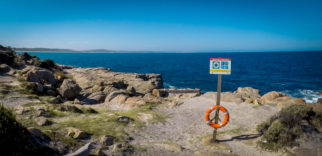
This angel ring located at Camp Rock/Quobba saved a young man’s life by keeping him afloat after he was washed off the rocks during dangerous conditions earlier this month on WA’s Mid-West coastline.

Rock fishing comes with many risks 

Recfishwest has installed 80 angel rings and deployed 174 loan lifejackets across WA to keep rock fishers safe as part of our WA safe fishing program and partners with the Bureau of Meteorology to share dangerous rock fishing alerts during the spring, summer and autumn months.  

Recfishwest’s Senior Operations and Safety Officer Sam Russell said fishing from rocks comes with many risks, particularly in poor weather conditions and high swell.  

“Even seasoned rock fishers can get caught out by so-called ‘rogue’ waves if not fully aware and prepared,” said Sam. “No fish is worth risking your life for – so unless you have plenty of experience, we recommend you keep the sand between your toes and fish off the beach. 

“However, if you choose to fish from the rocks, we advise you follow our rock fishing safety tips closely – check the weather and swell before you even consider going out, wear the right gear including a lifejacket and never go fishing alone.” 

READ ALL OF RECFISHWEST’S ROCK FISHING SAFETY TIPS HERE

Tim Meachan, owner of the popular land-based fishing spot of Quobba Station said there are loan lifejackets available to all fishers who wish to wet a line off the elevated cliff platforms. 

“All it takes is one rogue wave to come along and you’re in the water,” said Tim. “Given both of these men were wearing trackpants, heavy work boots and had no lifejackets on, if they both had remained in the water during those treacherous conditions this would have been a recovery mission of two bodies. 

“We are always happy to give out loan lifejackets to fishers at Quobba and you should always be wearing one when fishing off the rocks regardless of the conditions, but when the swell is this dangerous it’s not worth fishing off the rocks at all.”  

CLICK HERE TO SEE ALL OF THE FREE LOAN LIFEJACKET LOCATIONS ACROSS WA 

CLICK HERE TO READ POPULAR SOUTH COAST YOUTUBER CHRIS DIXON’S ARTICLE ON ROCK FISHING SAFETY 

Recfishwest led the charge to have more than 80 angel rings and 174 loan lifejackets deployed across WA to keep rock fishers safe, but fishing with a friend, wearing a lifejacket, analysing the conditions on arrival, tethering yourself to the rocks and wearing the right footwear should be the first safety measures when fishing off the rocks.

Community Champions Keeping WA Fishers Safe

Renowned for its pristine coastal landscapes, beaches and unique rock formations, Esperance is a popular spot for recreational fishing, hikers and four wheel drive enthusiasts.

With fishing high on the agenda for travelling families and tourists to the region, as they take a break in this beautiful seaside town, it’s the rocky terrain and unforgiving weather conditions at times, that can turn a pleasant trip down South into a disaster when lives are lost from slipping from a rock whilst fishing.

In late January 2017, two children (9 & 11yo) from a family went for a swim at Hellfire Bay (50km’s from Esperance, near Lucky Bay) and became caught in a rip. The father watched from the rocks, before noticing the children getting into trouble and moving into deeper water. An Angel Ring (life buoy) was located close by and the man was able swim the ring to his children who were then able to grab hold of it and together they were able to swim sideways to the rip and make their way safety ashore.

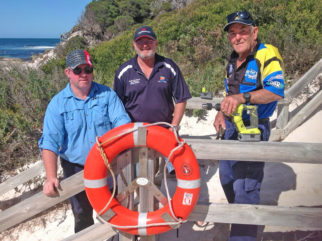
Local community champions Graham Cooper, Mike Spencer, Brett Thorp and Vince Evans have been working hard to keep their community safe when fishing from the rocks.

The team, who are all members of the South East Coast Recreational Fishing Council, recently installed six new Angel Rings and one Rock Anchor Point in areas which were identified as high-risk rock fishing locations along the coast from Quaggi Beach to Hopetoun.

‘’Who knows what would have happened if the Angel Ring wasn’t there,” said Mike.

‘’We applied for a Recfishwest Community Grant and have been pushing for more public safety equipment, such as Angel Rings and Rock Anchor Points to be installed at high risk fishing locations along the South Coast.”

‘’We could have had a three person fatality count that day. This incident certainly covers all the costs of installing the Angel Rings along the South East Coast.’’

Recfishwest CEO Dr Andrew Rowland commended the South East Coast Recreational Fishing Council for their efforts over so many years to keep West Aussies safe.

‘’Graham, Mike, Brett. Vince and others are great community role models and champions, volunteering their time to install public safety equipment which so many fishers rely on,” Dr Rowland said.

”Angel rings are an important part of our Fishing Safety Program and they have been used to save lives on the south coast.’’

“There are so many great people around WA who have dedicated their time to help their community stay safe when out fishing, from Quobba to Esperance, these people have hearts of gold and the 750,000 WA fishers should be grateful for the service they provide!”

Thanks to community partners and local helpers, more Angel Rings are set to be installed in Bremer Bay and Denmark. Currently there are 61 locations across the state with 67 Angel Rings installed for the community’s safety. View the locations here.

If you know of a rock fishing location that could do with an Angel Ring, let Recfishwest know at info@recfishwest.org.au.

The Survival Float: A Product Worth Investing In

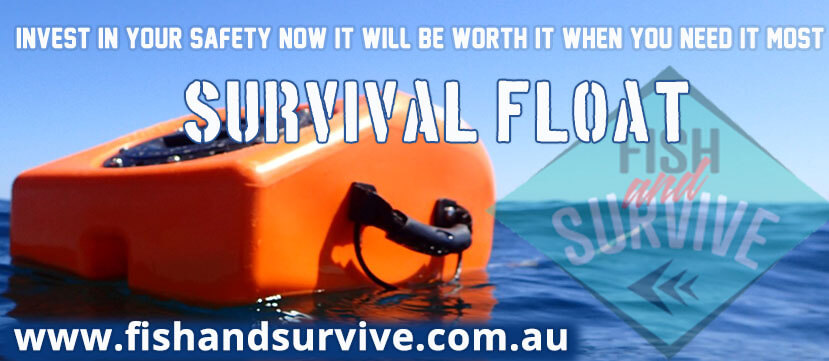
Coming home safe from a days fishing is something that is important to everyone.  Recently Australia was introduced to the Survival Float, a new invention designed by WA spear fishers to give all boaters the best chance of coming home safe after a day in the water.
While originally designed to increase the safety of those who planned to go in the water, its high-quality materials and in water testing to full immersion means that it is also the ideal piece of equipment to act as an emergency grab bag for boaters who are only entering the water due to an emergency situation.

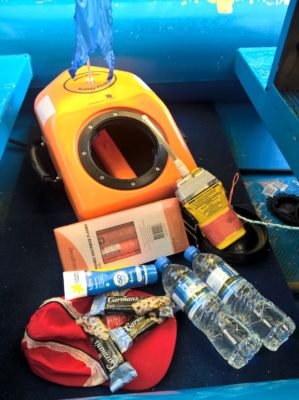
The Survival Float can store everything you need in an emergency.

An emergency grab bag (also known as ditch bag) is an important piece of safety equipment for boat fishers to securely store all of their survival equipment in a single, easily accessible location. A grab bag contains all of the things you need to get you through those situations no one wants to be in. By storing your EPIRB, flares, and water all in the same location you can be confident that in an emergency situation, when making the most of every second counts, you won’t be spending precious time rummaging through your gunnels and bow of your boat looking for the equipment you need to ensure the safety of you and your crew.

Storing your safety gear in the sturdy and UV resistant Survival Float also means that expensive life-saving equipment is protected from rough treatment and long-term exposure to salt water which can render it useless in a crucial situation.

Given the Survival Float was originally designed to be in the water and has been tested to full immersion, it means that in an emergency situation when you have to abandon ship, you can rely on its strong build and water tight seal to ensure your safety gear remains with you, and not at the bottom of the ocean. Its 20kgs of buoyancy can also give you added support for tired crew members who might need more than just their life jacket, while its massive 19L of storage room provides the space you will need to store all of your safety gear.

The float is available for purchase at Fish and Survive. For just $198 you can make an investment in your boating safety that will improve your chances of survival.


For more on the Survival Float click here.


Banner image credit: andreypolivanov.Shutterstock

WA Needs More Fishing Heroes!

Our Purpose is to ensure Great Fishing Experiences for all in the WA community forever.
Our Commitment is to Protect, Promote and Develop Sustainable, Accessible, Enjoyable and Safe fishing for the benefit of the community.

Thanks to our current supporters, Recfishwest can continue the fight to keep fishing great in WA.

Our role is to: 
– Be your voice that would not otherwise be heard
– Be the voice of the fish that otherwise goes unheard or ignored
– Keep you informed of all thing affecting your fishing, 24/7; we believe you need to know!
– Strive to ensure you and your family return home safe after a day’s fishing
– Defend your fishing rights when your local fishing spot is under threat
– Fight when access to fishing areas is put at risk
– Roll up our sleeves and find a solution when no one else will.

Contribute to what we do and support us, become a member and let us do the hard yakka on your behalf.  We don’t make profits here at Recfishwest and we make sure all our resources go directly towards our action to protect, promote and develop our fishing environments and to keep you fishing.

To give you an idea of where your support helps us make fishing better:
• Stocking of important recreational fish species around WA, including Pink Snapper, Barramundi, Prawns, Mulloway and Freshwater Trout
• Development, design and deployment of Artificial Reefs in Western Australia
• Development of important fishing research and conservation programs
• Development of WA’s ‘Fish and Survive’ program, to ensure all fishers come home safe after a day’s fishing
• Delivery of WA’s only state-wide fishing clinic program to thousands of kids in both metro and regional areas

A strong membership base allows us to pursue matters that affect your fishing with added confidence knowing you’ve got our back, just like we’ve got yours!

For just 50c per week, you can help us protect and develop fishing experiences in Western Australia, for the community forever.

Our position on mandatory wearing of lifejackets on boats

June 2017

Currently, the WA Department of Transport is conducting a review of recreational boating safety requirements and the public have been asked to put their views forward during the consultation period.

Safety equipment items under review include:

  • lifejackets;
  • distress signals – EPIRBs, PLBs and flares;
  • radios and distress signalling sheets;
  • compasses and GPSs;
  • fire extinguishers; and,
  • miscellaneous equipment (first aid, lighting, paddles, bilge pumps, anchors).

Recfishwest is a key stakeholder and is represented on the Department of Transport’s External Reference Group which provides input from all the relevant water using sectors, including recreational fishing.

One topic that is being widely discussed is the consideration for the mandatory wearing of life jackets on recreational vessels.

 Please see below our position on the issue of the mandatory wearing of life jackets on recreational vessels:

  • We encourage and promote safe fishing experiences for all and equip fishers with the knowledge so they can make their own decision to fish or not to fish (as we do for rock fishing), and we believe this needs to be applied to vessel safety
  • We support increased education campaigns towards vessel owners, of the risks associated with their safety, it’s important that people have good knowledge to make their own informed decisions in specific situations
  • We do not support a blanket approach to make the wearing of life jackets on a boat mandatory

– Fishing in WA offers a large variety of boat and kayak fishing opportunities and simply having one strict rule covering all those situations is not something we support

– Where there’s evidence and statistics to support the wearing of life jackets in high-risk situations such as boat fishing at night or by yourself, like some other states, we would consider this approach instead

– We believe safety comes down to the individual and personal responsibility is the key factor

  • We believe educating boat fishers on the advancement of life jacket technology is important. There are some great slim fitting, compact life jackets that are designed to be worn on the market now, and for a really reasonable price.  Educating the boating public and empowering them to make their own choices is a better approach than making it compulsory

Recfishwest works hard to promote safety and we want to see all fishers return home safe at the end of a day’s fishing.

If you’d like to have your say, please visit the Department of Transport’s survey here.

Recfishwest Welcomes Continued Commitment to Support Safe Fishing as Major Milestone Achieved

Recfishwest welcomes continued commitment to support safe fishing as major milestone achieved.

In a huge achievement for fishing safety in WA, the 50th Angel Ring has recently been installed at high-risk fishing locations across the state and Recfishwest has plans to install plenty more in the coming year. Angel Rings (or Life Rings) are an important piece of public safety equipment and are an effective tool to help save lives, especially amongst rock fishers.

Recfishwest Chief Executive Officer Dr Andrew Rowland said fishing safety developments over the past few years had come on leaps and bounds and this is a milestone for which all involved should be very proud.

“Our commitment to improved safety stems from the fact that we want to see all fishers return safe to their family at the end of a days fishing,” Dr Rowland said.
“There is no better feeling than hearing one of these rings has been used to save a life.”

“Land managers around WA, including Department of Parks and Wildlife, Local Governments and station owners have been tremendous in helping install important safety infrastructure at high risk fishing locations along great expansions of the WA coastline.”

“The roll-out of Angel Rings has been driven by locals on the ground in the regions who want to help keep their community stay safe. These installations not only benefit fishers but all users, visitors and locals alike.”

“We are very pleased to see the McGowan Government support this program, whereby a relatively small amount of funding greatly increases public safety outcomes,” Dr Rowland said.

ENDS

___________________________
Recfishwest MEDIA CONTACT: Tim Grose, tim@recfishwest.org.au

If you must fish from rocks, Recfishwest wants fishers to understand the simple rock fishing safety messages:
• Know how to swim – If you can’t swim, fish from the beach
• Wear a Life Jacket –small fishing life jackets, designed for fishing, worn by all safe rock fishers are recommended
• Never fish alone – fish with friends and family
• Observe first, fish later – watch the ocean conditions, the beach is always safer
• Use appropriate safety equipment – if rock fishing, use rock boots, wear light weight clothing, take ropes to tie onto rock bolts, wear a life jacket
• Tell someone your plans – tell your family where you’re fishing and when you’ll be home

There is also no shortage of Free Life Jackets around WA that fishers can hire for the day to ensure they return home safe after a days fishing. To see where you can pick up a free life jacket, visit: https://recfishwest.org.au/rock-fishing-safety/
________________________________________
Fact File:
• In WA alone there have been 26 rock fishing deaths since 2002, despite this, some fishers are still putting themselves at risk of injury or death.
• Currently there are:
– 54 Angel Rings (Life Rings) installed at high risk fishing locations statewide (with another 9 to be installed soon) Current Locations include: Esperance & Surrounds, Albany & Surrounds, Denmark, South West Capes Region, Kalbarri, Quobba Station (9 to be installed), Steep Point, Dirk Hartog Island
– 36 Rock Anchor Points installed for fishers to tie themselves onto have been installed at high risk rock fishing locations on the south coast including: Esperance & Surrounds, Salmon Holes in Albany
– 21 locations have been established between Esperance and Carnarvon where the public can borrow 150 free life jackets.
• Recfishwest, under a contractual arrangement with the WA Department of Fisheries, leads the fishing safety program ‘Fish and Survive’ in WA, which aims to change behaviour of fishing safety through public awareness, promotion and communication of safety, and installation of safety equipment at high risk fishing locations across WA
• The Government has funded the program $140,000/yr for the next three years in a bid to reduce fishing related drownings and incidents.

Fish and survive this abalone season

Recfishwest and Surf Life Saving WA (SLSWA) are urging people to remain mindful of the conditions and take personal responsibility for their actions through the abalone season which begins this Sunday, November 6.

The popular West Coast Zone Abalone season sees thousands of fishers take to the inshore reefs around the metropolitan coastline, during the one-hour fishing periods from 7am to 8am on the first Sunday of each month until March.

Recfishwest CEO Dr Andrew Rowland said abalone wasone of the most sought-after shellfish, with more than 17,000 licence holders taking part in the fishery last year.

“We urge abalone fishers to exercise caution whilst fishing and to be aware of the weather conditions,” Dr Rowland said. “An early abalone fishing session is a great way to spend the morning with the family as long as it is carried out safely.’’

The abalone season is stretched out over several months and allows for plenty of opportunities for people to get out and fish for them.

“Quite simply, if the weather is unfavourable or you’re unsure of your ability in the water during rough conditions, don’t risk your life and go next month when the weather may be better,” Dr Rowland said.

A number of surf clubs, with the support of SLSWA, will be putting on additional services for Sunday’s season opening, including the Wesfarmers Jetski response teams, while the Westpac Lifesaver Rescue Helicopter will cover key locations to watch over fishers.

Despite these extra services, SLSWA General Manger Chris Peck warns fishers not to be complacent.

“Since 2012 there have been three deaths while abalone fishing and in the past three years surf lifesaving services have had to perform 42 rescues of abalone fishers – an alarmingly high number for this one recreational activity,” Mr Peck said.

“Traditionally we will also see cases of hypothermia, or be required to perform resuscitations having retrieved fishers from the water where they may have been washed off the rocks.

“We urge fishers to consider their own lives, and the lives of those tasked to rescue them, before putting themselves and our volunteer lifesavers in dangerous situations for the sake of catching their quota of abalone.”

Recfishwest and SLSWA have offered these tips for all abalone fishers:

  • Check conditions before heading out check weather conditions, including wind conditions and swells. Visit www.beachsafe.org.au for up to date reports or download the free Beachsafe App;
  • Observe first, fish later – do not attempt to fish if you are unsure. Read the warnings and dangers on any safety signs;
  • Wear appropriate clothing or wetsuits – avoid heavy clothing, including tracksuits and work boots that become water logged and heavy;
  • Never fish alone – stay in a group and keep an eye out for your friends and other fishers;
  • Don’t panic – if in trouble stay calm and raise one arm and wave from side to side to attract attention; and,
  • A bag limit of 15 Roe’s abalone per person, per day in the West Coast Zone applies.