Scott’s Species – bluenose salmon, a tough and fierce fighter

Catching a bluenose salmon never leaves Western Angler editor Scott Coghlan blue in the face. The seasoned fisher loves catching the sportfish when he’s in WA’s north and the species is the focus of this week’s Scott’s Species, written exclusively for Recfishwest’s website.

Species: Bluenose salmon, Eleutheronema tetradactylum

Eating: 4 star

Description: Filaments behind gills make them easily identifiable. Blue salmon have four pectoral filaments, while threadfin have five.
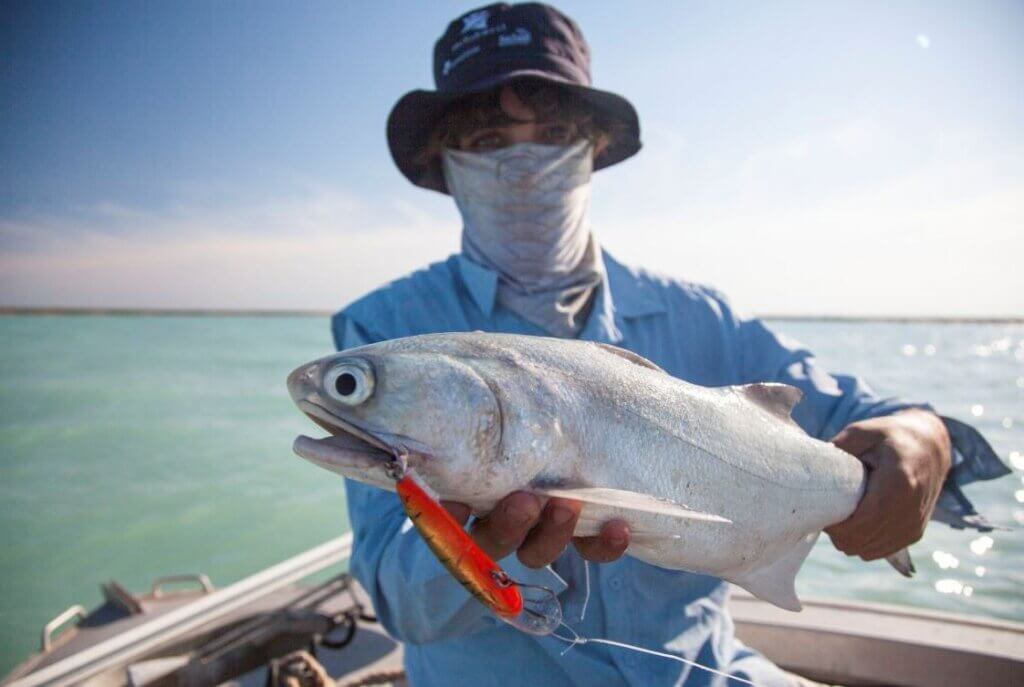
This aggressive bluenose took Recfishwest Programs Manager James Florisson’s lure, near Broome.

Something of a little brother to threadfin salmon, bluenose salmon, also called blue and blue threadfin, are nonetheless a fun sportfish in their own right. They are generally found from Exmouth north, but in recent years have been encountered much farther south at times.

We were also surprised to find a variety of blue salmon at the Cocos Islands. Broome is a stronghold for them, as they are caught regularly in Roebuck Bay, including in Dampier Creek and along Cable Beach.

Interestingly, although they appear a very mobile species, research has shown that there is little movement between local stocks, even when there is no obvious barrier to movement.

Some people call blues the tailor of the north and the comparison is apt, as they also turn up in groups and are a speedy fish that likes to pounce on unsuspecting baitfish.

On a recent trip to the Kimberley, we regularly had our barra sessions interrupted by fish smashing bait on the surface, and it inevitably turned out to be packs of marauding blue salmon.

Blue salmon grow to more than 1m and 15kg globally, but a maximum of about 80cm in WA waters.
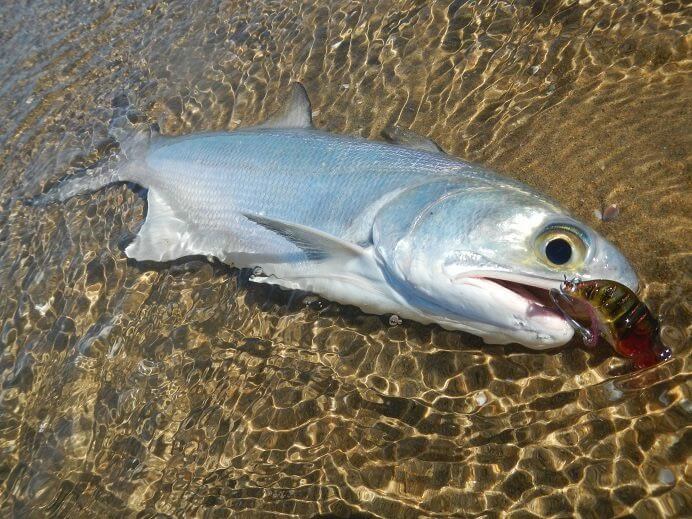
Bluenose of this size are a staple in WA’s north, however, they grow much bigger in other parts of the world.

Most caught will be much smaller than that and 1kg to 3kg fish are most common.

They are a good fighter with speed and propensity to jump, again like tailor.

We’ve usually bumped into blue salmon in small creeks and shallow water, which is their favourite hunting ground.

This makes them a target for either shore or boat anglers.

They will happily take most baits and lures, although I would argue the latter approach makes the most of what they offer on the end of a line.
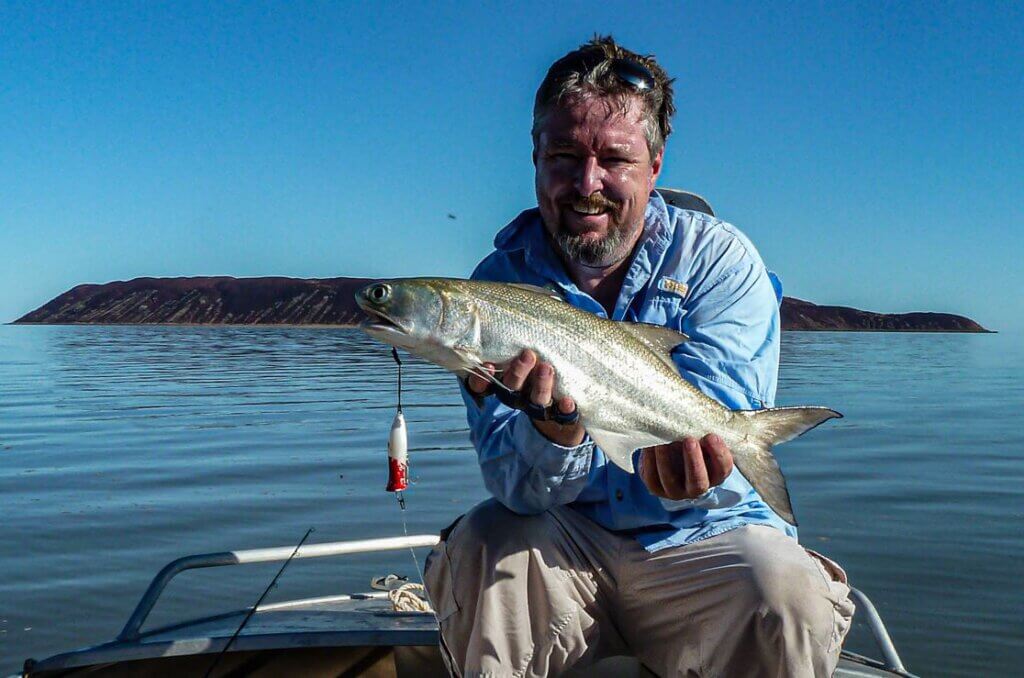
Western Angler editor Scott Coghlan tempted this bluenose on a popper.

They aren’t usually fussy and will hit most lures, including bibbed minnows, stickbaits, soft plastics and vibes, as well as poppers.

Blues can also be a lot of fun on fly gear. They are often caught while casting lures for barramundi, as they often hold in the same locations.

Working lures fast is not a problem for blues as they are ferocious predators and aren’t deterred by hunting in dirty water.

They are usually a clean fighter so heavy tackle is not needed, and a 7kg-9kg spinning or baitcaster outfit appropriate for the type of fishing being done should be ample for catching blues.

Some slightly heavier abrasion resistant leader is also a good idea, especially given the possibility of hooking a barra or threadfin

Blue salmon are regarded as excellent eating, especially fresh, with tender white flesh and good-sized fillets with few bones.
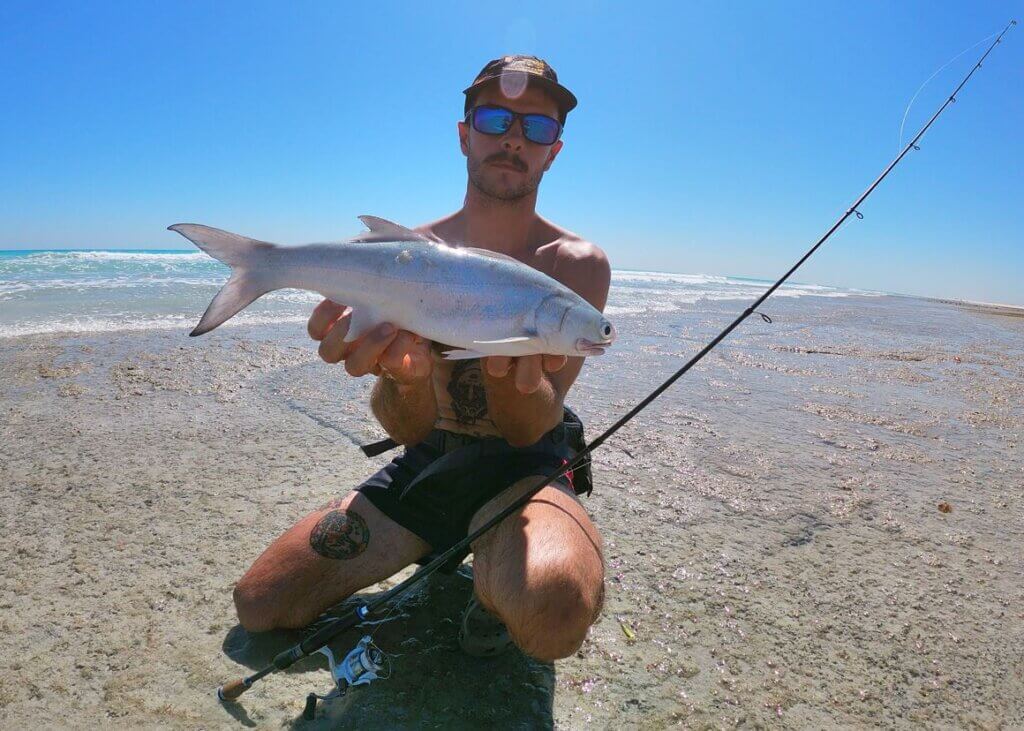
Bluenose are a fantastic land-based option in the State’s north, as shown by Jade Relph.

Scott’s Species – red emperor, a fish worthy of the throne

Red emperor are fittingly named, given the species does indeed sit atop the throne for many demersal fishers in the northern half of WA, writes Western Angler editor Scott Coghlan in this week’s anticipated edition of Scott’s Species.

Species: Red emperor, Lutjanus sebae

Eating: 4.5 stars

ID: Striking red colouration, with bands down the side.

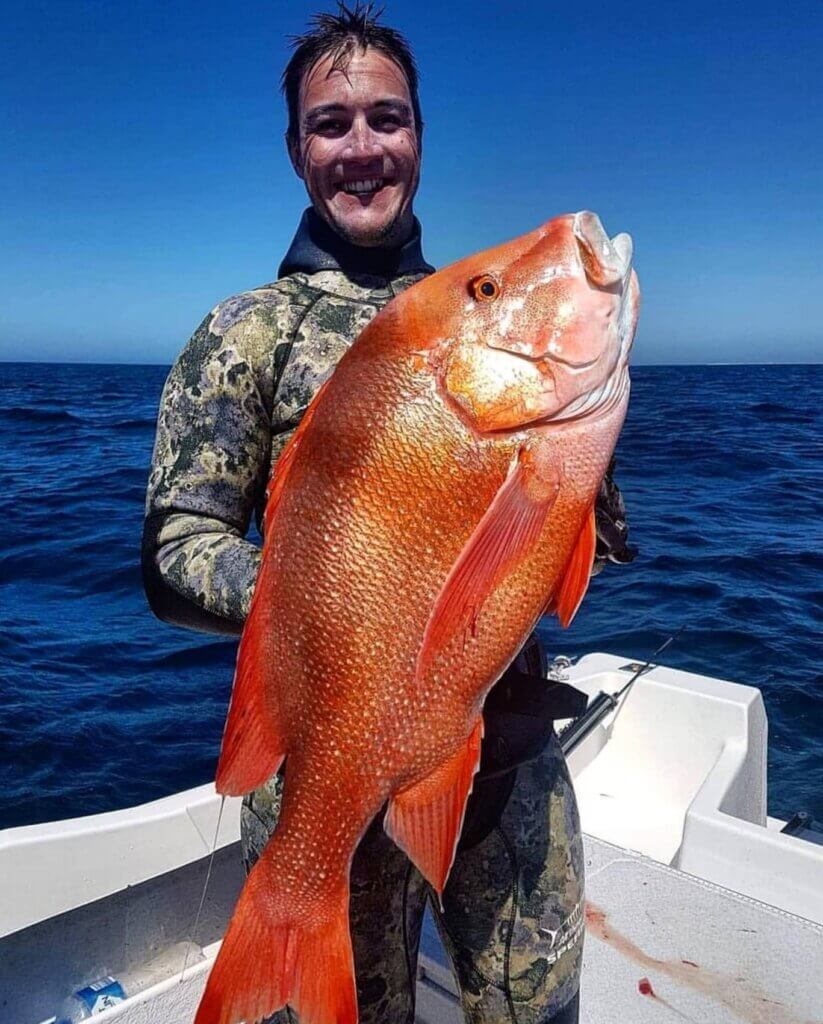
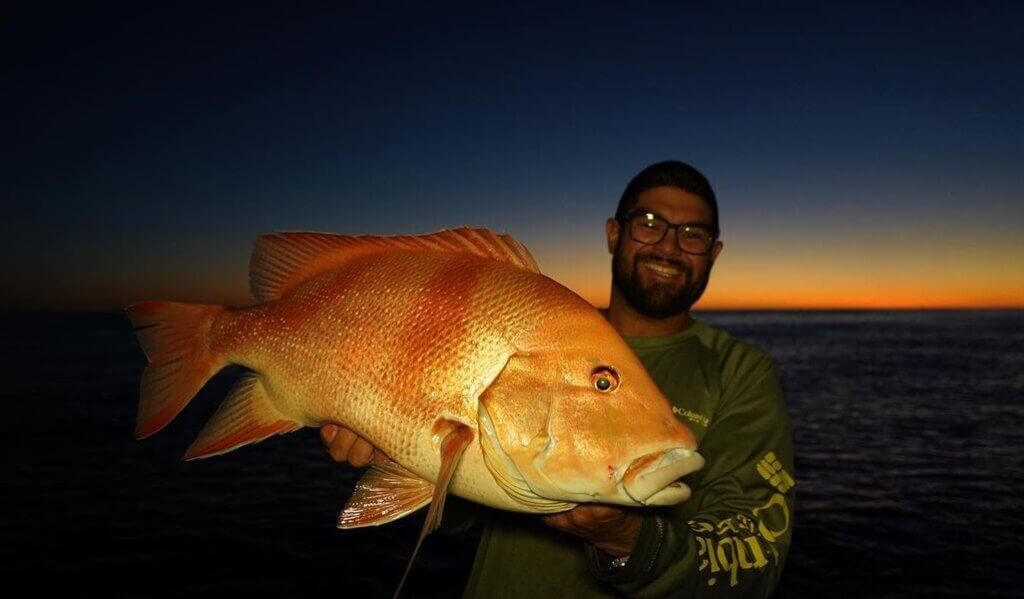
Brenton Cartledge with a lovely red emperor off Dampier.

Often when visitors arrive in places like Shark Bay, Exmouth, Carnarvon and Onslow the first thing they want to know is where to find red emperor!

However, such information is rarely shared freely as locals protect their prizes spots.

Reds are found from Kalbarri in WA north and across to southern Queensland. They can grow up to 22kg, but few are seen more than 15kg and most fish will under 10kg.

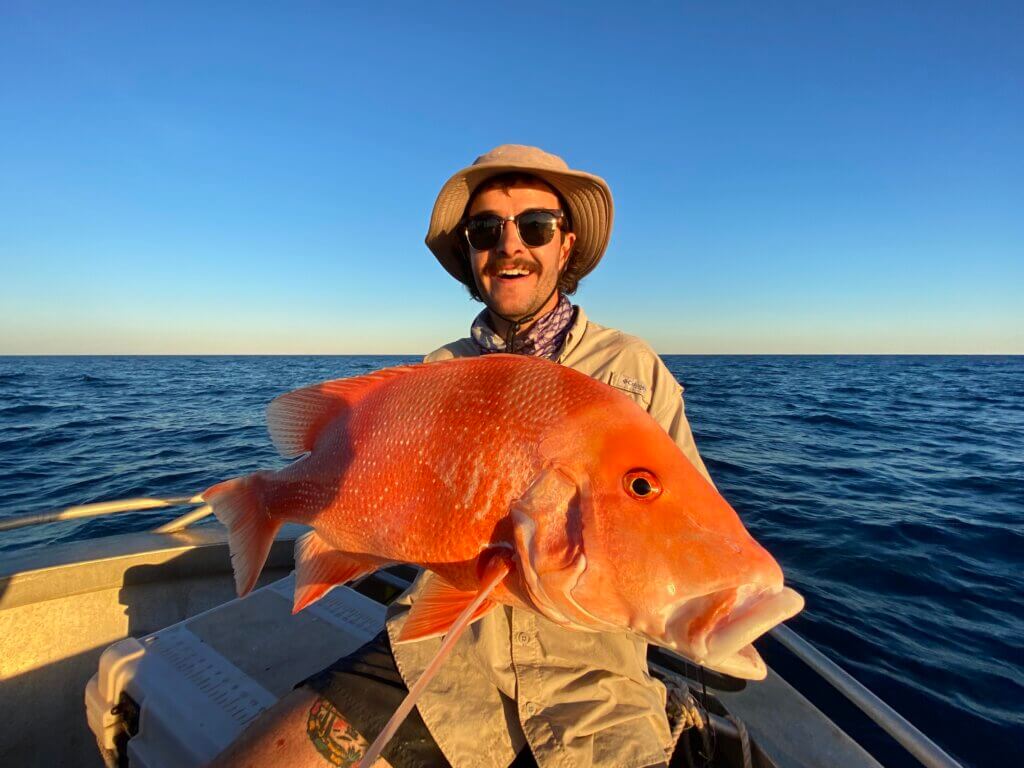
Coral Bay produced the red emperor goods for Caleb Moore.

The best I have seen, at the Mackerel Islands, was around 12kg. They are usually encountered in depths greater than 20m, often from 50m to 70m, and often encountered in schools around reef edges and bommies.

Surprisingly good reds can be caught in water around 20m deep, so you don’t necessarily need to go really wide to find them.

Drifting around likely spots is the usual approach but anchoring and burleying is also productive and I have seen this work very well at the Mackerel Islands for Darryl Hitchen.

The key with reds is to get them off the bottom quickly when hooked as they are a powerful fish.

WATCH: Red emperor schooling at Exmouth’s King Reef

Due to this, main line of at least 23kg is favoured, with heavier leader. Sadly, sharks are also an issue in many spots where reds are prevalent and can make landing them very tough if not impossible at times.

Braid is the best option for the main line, as it lessens the bow in the line caused by fishing at depths.

Standard boat fishing tackle will suffice. Bigger fish are often encountered after dark and this is a great time to fish for them if possible.

Popular baits include squid, octopus and pilchards and they definitely appear to bite better on bait than artificials.

Weighted soft plastics also work, but red emperor are not as responsive to metal jigs as many other demersal species.

This red emperor off Broome put a smile of Jade Relph’s face!

Scott’s Species – giant herring, stunning slender silver speedsters

Slender, silver, speed machines! Giant herring are without doubt an awesome sportfish to target, writes Western Angler editor Scott Coghlan in this week’s Scott’s Species.

Species: Giant Herring, Elops machnata

Eating: 1 star

ID: Long slender body, prominent dorsal fin, bony mouth and large forked tail.

Giant herring are found from Albany on the south coast of WA all the way around to the top of the State.

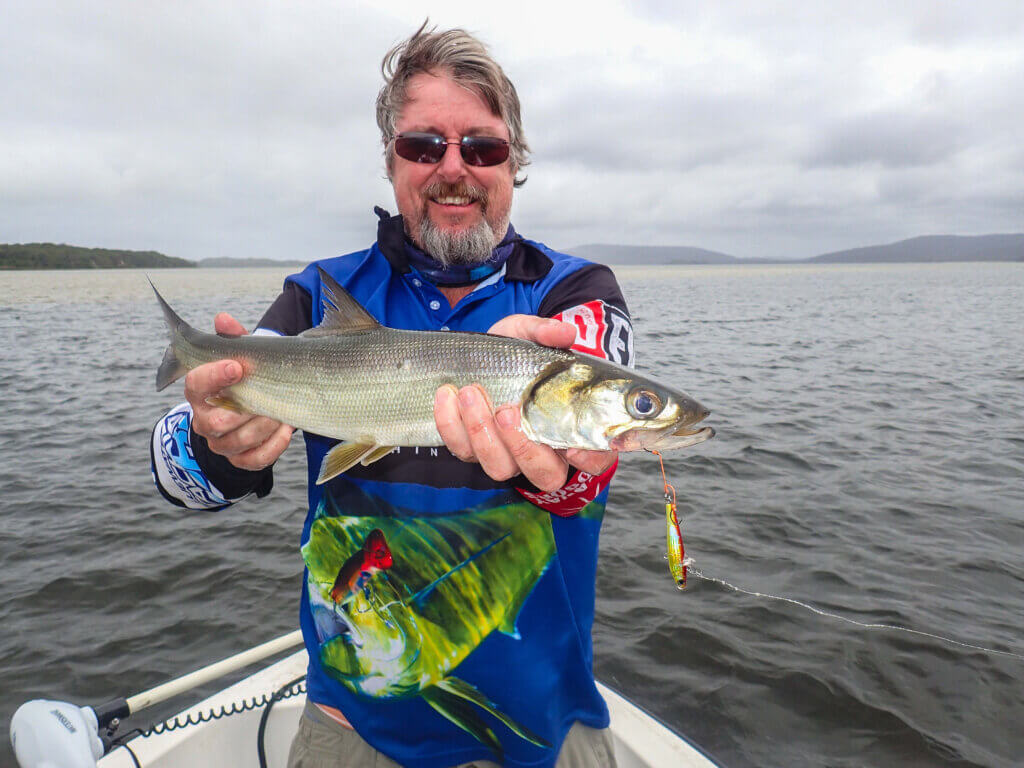
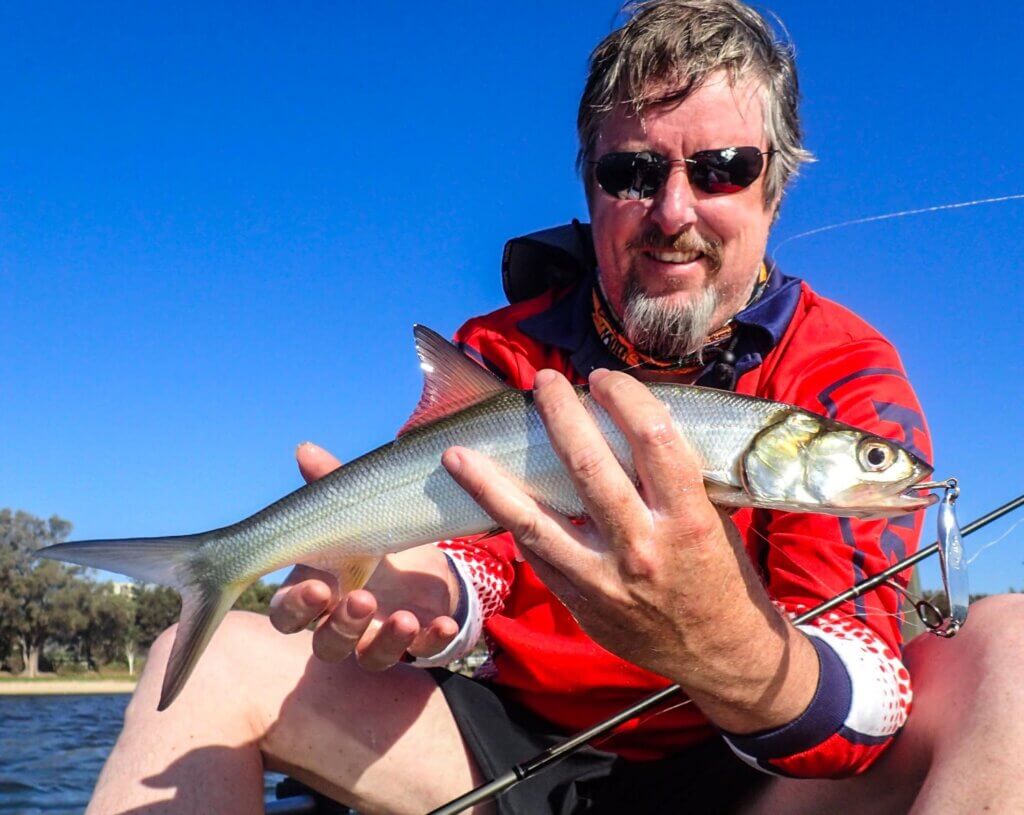
Article author Scott Coghlan with a south coast giant herring.

They are not a common catch on the south coast, but there are often reasonable numbers in the Nornalup Inlet.

They become more prevalent along the west coast, with good numbers in the Collie River and Leschenault Estuary at times, as well as in the Swan River most years these days.

Chasing them in the Swan in summer has become a popular pastime for light tackle sport fishers in recent years, but finding them can be challenging. At times they are everywhere and the action is insane for a metro river, but then they can be almost impossible to find at other times.

When they are around and on the bite, the big boils, bow waves, explosive strikes and stunning leaps make for an unforgettable Swan fishing experience.

For many years they seemed to vanish from the Swan system, but the last decade has seen them return strongly and in some surprisingly good sizes.

Flats are a good area to seek them out in the Swan, especially if there is a sizable drop-off nearby. We used to do well around Burswood for many years and Claremont has been another hot spot at times.

WATCH: Fishing the Swan River for giant herring

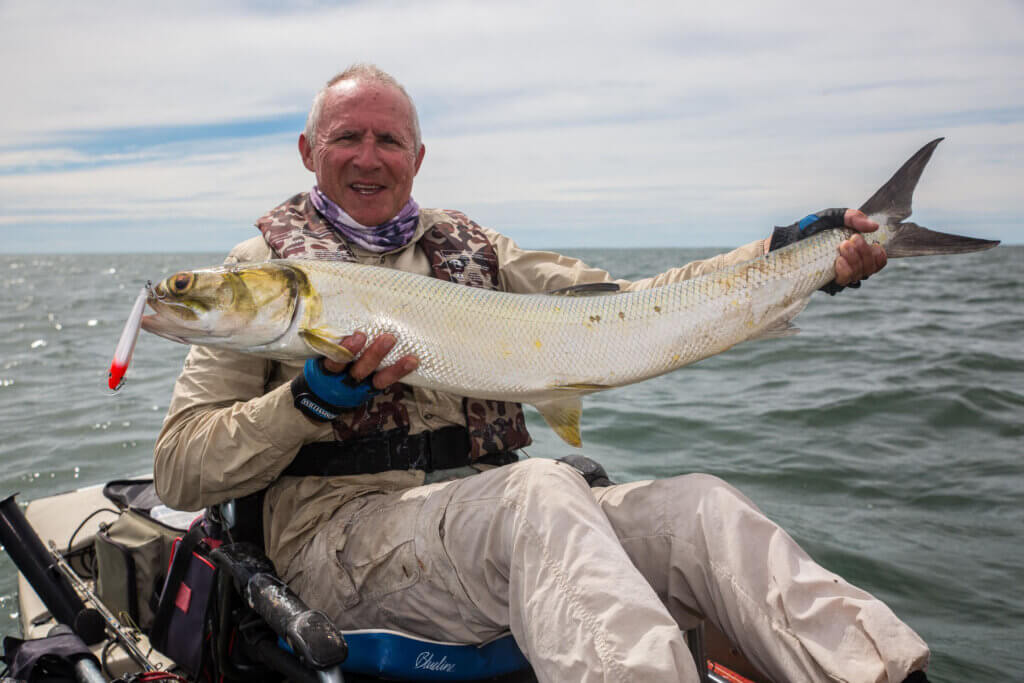
The best giant herring we have encountered have been in Exmouth Gulf, where we have caught fish to 1.2m from our kayaks. At that size they are a real trophy catch and I’ll never forget seeing my first 1m-plus giant pop up next to the kayak after hooking it trolling.

Unlike most giant herring it never jumped so I had no idea what it was until I saw it. That made me nervous as I had never caught a big one before.

Big GHs like this often show up in the Gulf. Usually an estuarine fish, they can also be found in freshwater billabongs in the northern half of the country.

Although they grow to more than 10kg and more than 1m in length, most giant herring caught are much smaller than this and any fish measuring more than 60cm is a good one, especially at the southern end of their distribution.

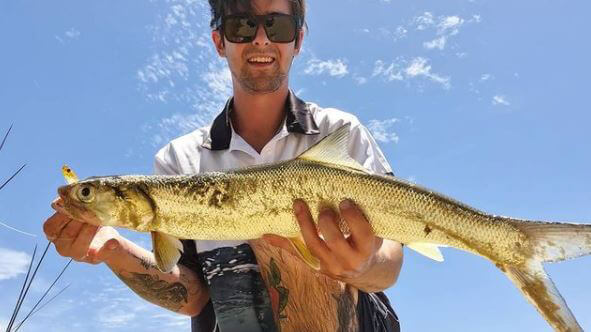
Woah! Glenn Edwards with a monster giant herring from near Wilderness Island.

They are often found in small schools and many anglers believe they fish best when there is some chop on the water.

GHs are poor eating, but these fish are amazing fighters and offer a massive challenge on light gear. Although they are not that hard to hook initially, keeping them connected is another matter altogether.

Their bony mouths and violent head-shaking leaps throw the hooks most of the time, leaving the angler with nothing but a memory of the brief encounter.

They also have small raspy teeth that will quickly wear through thin leader. A mainline of 4kg-6kg braid or mono should be sufficient for all but the biggest fish, and mono actually offers the advantage of offering more give during the fight.

Scott Coghlan won’t forget his battle with this little speedster.

Fluorocarbon leader of around 9kg is needed. There are a numbers of lures that can be used for giant herring, including bibbed minnows from 6cm-12cm in length, poppers, stickbaits, metal slices and soft plastics.

Giant herring often respond best to a fast retrieve and casting metal slices long distances and winding them back at full speed can be a good way to seek out fish.

Bear in mind that the heavier the lure, the easier it is for the giant herring to dislodge it during the fight. Replacing the trebles with assist hooks is worth considering if giant herring are being sought.

They are a favourite of fly anglers and an eight-weight outfit would be sufficient for all but the biggest fish.

John Dempsey with a strategically taken photo to ensure the location of this Swan River giant herring catch remains undisclosed.

Scott’s Species – dogtooth tuna, a bucket list pelagic

Dogtooth, or doggies as many anglers call them, are one of the most prized gamefish in the world, writes Western Angler editor Scott Coghlan. For many fishos, myself included, doggies are a bucket list capture. Read more about the formidable pelagic species that have fearsome teeth in this week’s edition of Scott’s Species.

Species: Dogtooth tuna, Gymnosarda unicolour

Eating: 3 stars

ID: Prominent lateral line, large teeth.

With a large eye suited to hunting squid and fish in deep water, doggies are usually found around underwater structure such as reefs, drop-offs and ridges.

Scott Coghlan was targeting GT when he hooked-up with this surprise doggie!

Sadly for doggie hunters they aren’t common in WA and only a few locations, generally very remote, produce them.

The odd dogtooth gets taken near the Montebellos at the spot called Rankin Bank. Aside from that, you are looking at spots like the Rowley Shoals and Scott Reef.

I’ve fished the Rowley Shoals a couple of times and we’ve only caught a handful of doggies in small sizes.

Some other big hook-ups have suggested doggies, but have ended in tears, and getting them past the sharks is a major problem. Certainly others have had success on them at the Rowleys.

Some of the crew we were with went diving and spotted them right beneath our boat, while the late Hal Harvey picked up a good one from the back of the boat at anchor.

I haven’t fished Scott Reef but it is known to produce good dogtooth, with sharks less of a problem than at the Rowleys.

The other ‘West Aussie’ option for dogtooth are the Indian Ocean Territories of the Christmas and Cocos islands.

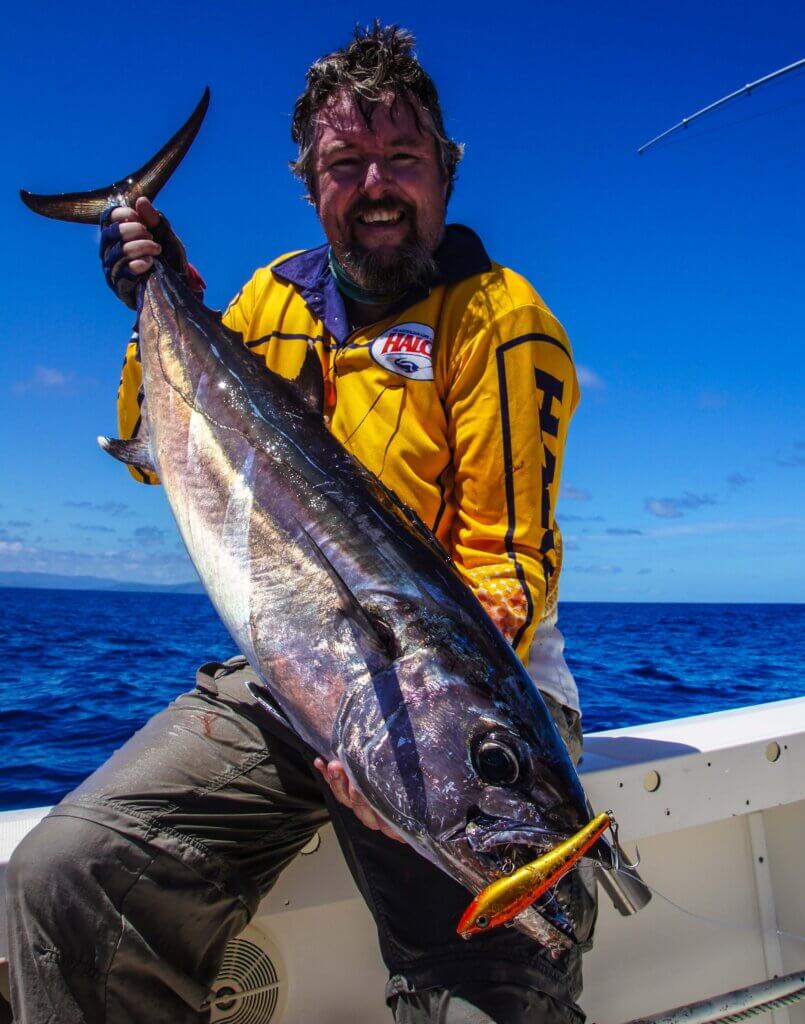
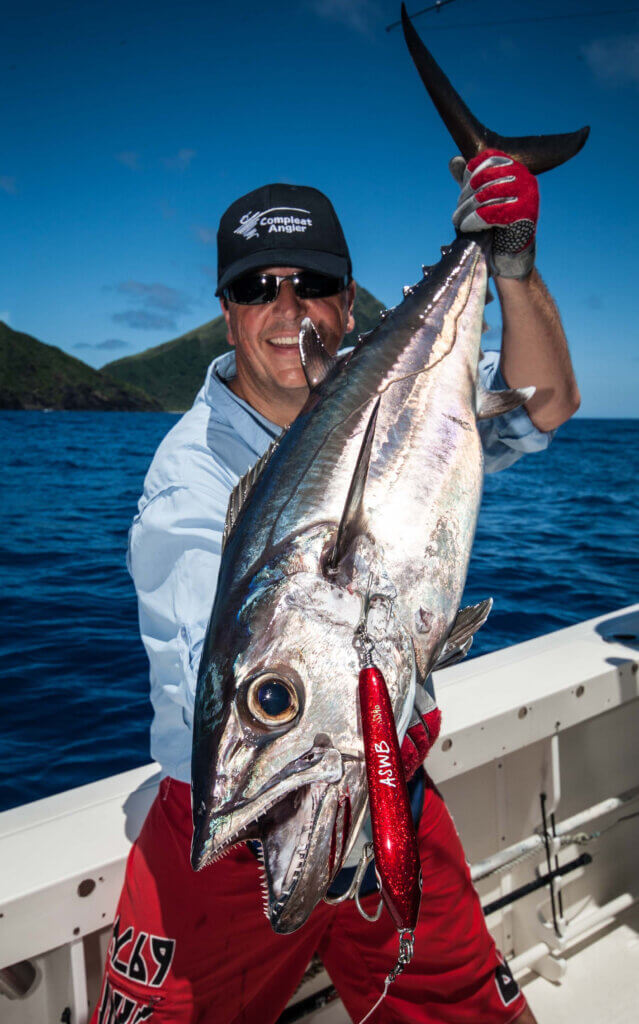
Western Angler editor and self-confessed dogtooth tuna enthusiast Scott Coghlan with a doggie at the Cocos Islands.

In the current COVID-19 pandemic environment they offer the most accessible ‘overseas’ fishing trips for West Aussies and both hold good populations of dogtooth tuna.

Doggies love to lurk in areas when there is a sudden drop into deep water and both of these locations offer this. I picked up a solid doggie of around 35kg on a surface stickbait at Cocos earlier this year, while casting for giant trevally.

Although we were only fishing in 10m of water, as soon as I hooked it in a big surface strike at the boat the fish headed back over the drop-off and into the depths.

Underwater peaks in very deep water are also noted for producing doggies. The first place I encountered them was in Vanuatu and the biggest one I have seen caught was around 75kg and taken jigging in Fiji.

This dogtooth tuna put Andrew Pennisi’s reel through its paces at Vanuatu.

Dogtooth grow to more than 130kg and 1.5m in length and their combination of speed and stamina makes them a favourite with heavy tackle game and sport fishers, although they are also prone to overfishing and can be tough to release as they have a habit of fighting themselves to the point of total exhaustion when hooked.

The handful I have caught have all come to the surface belly up with barely a flicker of life left in them. When hooked they have enormous power and will usually head straight for bottom structure and even smallish fish will test gear and angler, with most dogtooth caught under 40kg.

Doggies will hit a wide range of lures, with metal jigs probably the most popular method because of the depths they tend to frequent. Trolled minnow lures and skirted lures will also work.

As I found at Cocos, at times they will move up in the water column to take poppers and stickbaits, making for very exciting fishing.

Serious game fishing gear is needed, with quality spinning or overhead reels spooled with line of at least 37kg in strength recommended. Dogtooth are rarely an accidental capture and are usually caught by anglers specifically targeting them.

Scott Bond and a smaller dogtooth at the Rowleys.

Scott’s Species – black marlin, a fearless bluewater predator

In this week’s Scott’s Species, published exclusively on Recfishwest’s website, Western Angler editor Scott Coghlan takes an in-depth look at a revered game fishing species — black marlin.

Species: Black marlin, Makaira indica

Eating: 4 stars

ID: Rigid pectoral fins that cannot be folded against the body.

Found all around Australia, black marlin are a prized catch for game fishers, and with good reason.

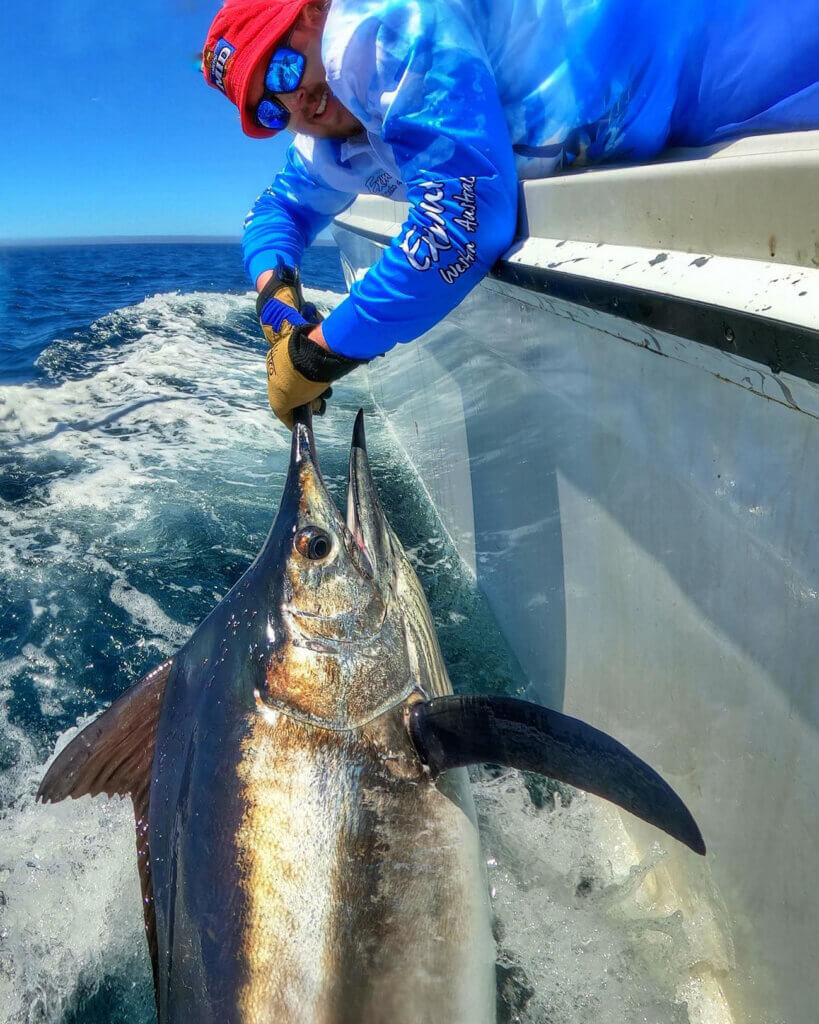
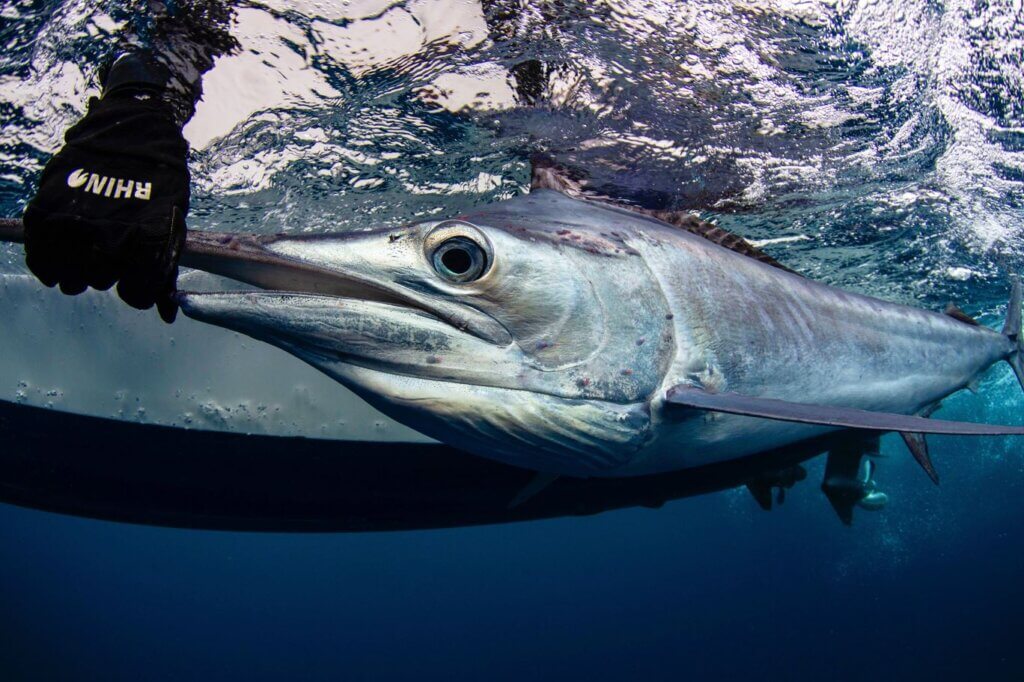
Dillon Paul with a lovely black marlin off Exmouth during the 2021 GAMEX! Credit Peak Sportfishing Adventures

Growing to 900kg globally but rarely encountered at more than 200kg in WA waters, they are as reasonable common bluewater catch in some areas, especially in small sizes.

The Great Barrier Reef is well-known for consistently producing 500kg-plus black marlin.

When it comes to fishing for them in WA it is hard to go past Exmouth, where the proximity of the Continental Shelf to the Ningaloo coast means they can regularly be caught from small trailer boats, including tinnies.

They are inshore in good numbers in the cooler months off Ningaloo and, as they are generally fish under 100kg, they can offer great fun on light gear rather than the traditional heavy trolling gear usually used for billfish.

I am usually not a keen marlin troller myself, but have enjoyed catching blacks on stand-up gear.

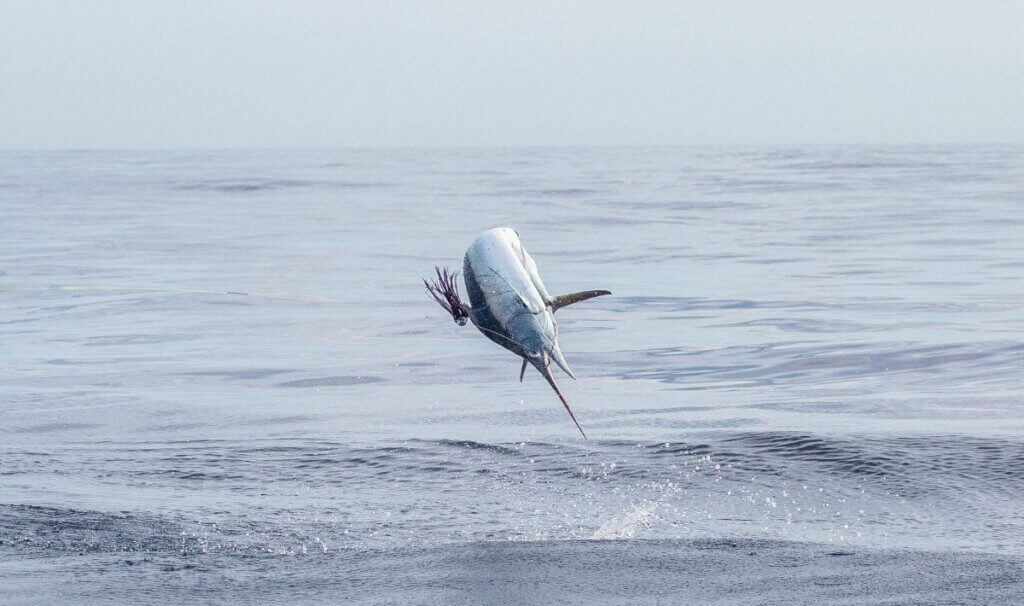
A small black takes to the air off Ningaloo. Picture: Western Angler

They are also taken regularly off Dampier, Broome and out behind the islands off Carnarvon, as well as west of the Abrolhos Islands.

In summer they also can show up off Perth, usually in years where there is a strong Leeuwin Current pushing them down south from the north.

Usually found in waters deeper than 50m, they will hit large trolled deadbaits and large skirted lures, and occasionally are caught by shore anglers using specialist gear and techniques to target them in spots where there is deep water close to shore, such as Quobba, Dirk Hartog Island and Steep Point.

Once hooked, they take off on fast runs and often jump high in the air.

Other than pending record fish, virtually all black marlin are released, often after being tagged for research purposes. They are one of the few recreational-only fish species in Australian waters, along with blue marlin.

How’s this fantastic photo Marco Fraschetti took of a black marlin off Exmouth!? Picture: Marco Fraschetti

Scott’s Species – barracuda, a fish not sought by many

This species shares its first five letters with the world-renowned barramundi. However, this ‘barra’, the barracuda, doesn’t share the same reputation among the fishing community. Read Western Angler editor Scott Coghlan’s latest edition of Scott’s Species below.

Species: Barracuda, Sphyraena barracuda

Eating: 3 stars

ID: Silver sides, grey bands along side, large teeth.

I have to say ‘cuda are one of the fish I try to avoid like the plague.

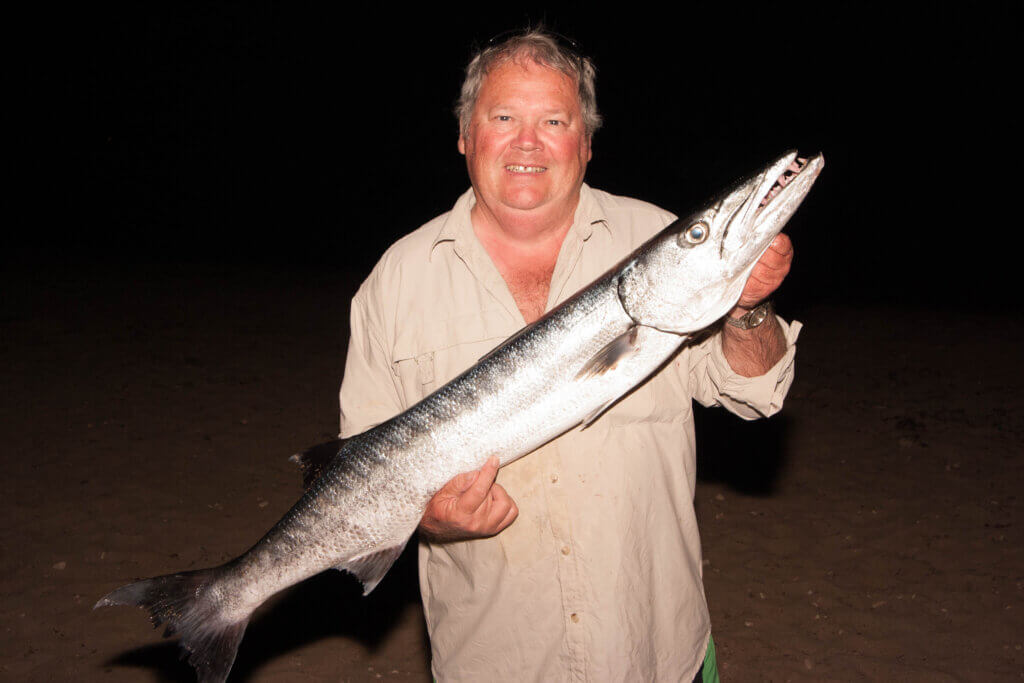
Barry Wiseman with a Mackerel Islands barracuda. Picture: Western Angler

Indeed on our annual kayak trip to Wilderness Island they are one of only two species that earn points towards the wearing of the dreaded pink dress at the end of the week. And they seem to find me!

I’m not sure where my irrational dislike of barracuda came from, but possibly it was when I had a fishing companion explain that he lost an eye to one when an unhooking went wrong and the fish latched onto his face.

I reckon there are only two fish that actually try to bite you and they are ‘cuda and long toms. As such I dislike both quite a deal.

When you try to unhook them you can see their beady eyes watching every move, just waiting for an opportunity to sink their teeth into human flesh.

They also aren’t great fighters on the end of a line either, even at the huge sizes like the one Rex Hunt famously caught one day off a sand cay on his show.

WATCH: Legendary fisher Rex Hunt lands a big ‘cuda

You can imagine my disappointment at Cocos Islands earlier this year when I had a GT popper monstered with a big flash of silver after hours of unrewarded casting, only to have a dirty great ‘cuda reveal itself as the protagonist.

Fortunately, the hooks pulled before I had to deal with it.

Although there are actually several species of ‘cuda in Australian waters, the great barracuda is the most commonly encountered and are sometimes found from the South West of WA, but mainly from north of the Abrolhos, all the way north and across to lower Queensland.

Barracuda are a fearsome looking fish with their sharp teeth and are extremely aggressive, in and out of the water.

At their upper size of around 2m in length and 40kg in weight, they are best handled extremely carefully, as I’ve alluded to already.

Barracuda often travel in large schools and when they turn up, it can be best to move to a new area if you are chasing other species as they are voracious feeders.

They will hit any lure or bait and will bite through line if wire is not used. Although they hit often give up quite quickly they will sometimes jump in an attempt to throw the hooks.

While they are often used for food in areas like the Pacific, barracuda are not a popular eating fish in Australia.

They have soft flesh and are best consumed fresh. They can also be prone to ciguatera elsewhere, but not in WA waters.

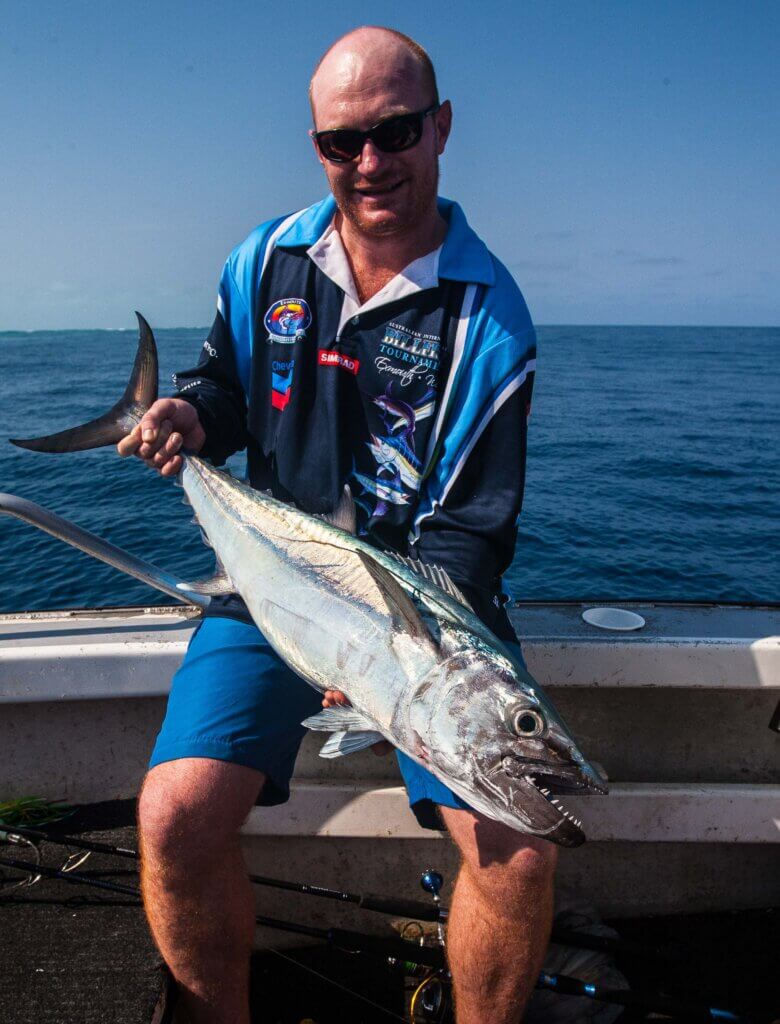
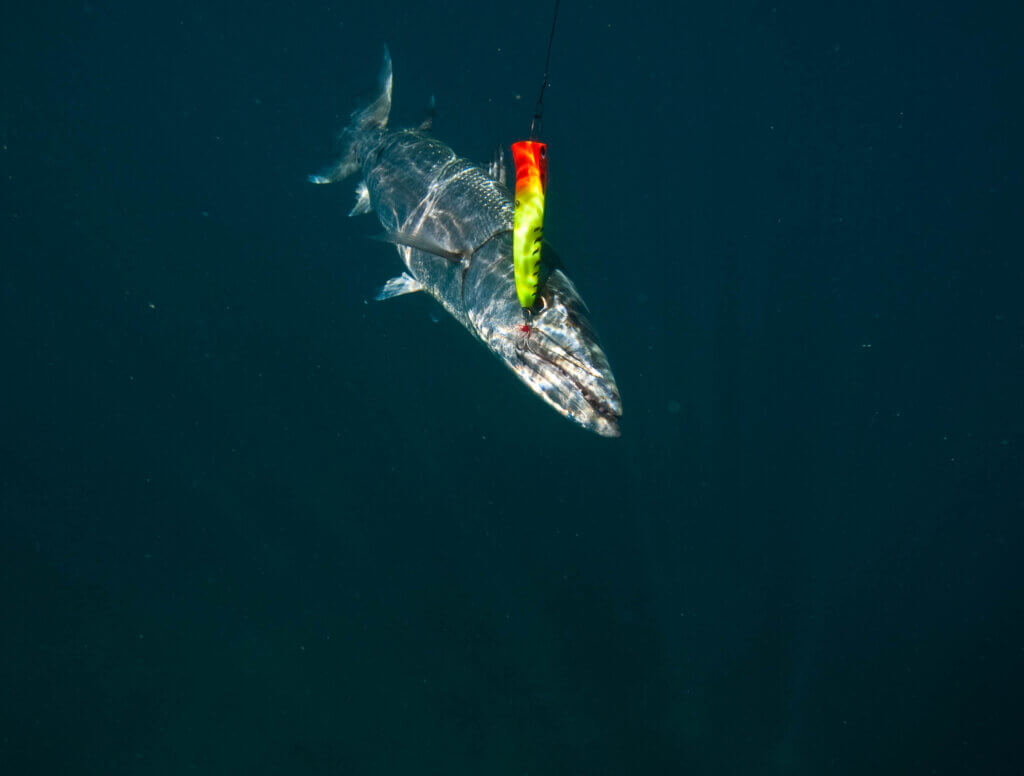
This barracuda took Scott Coghlan’s popper while he was chasing GT, much to Scott’s despair.

Scott’s Species – southern bluefin tuna, a migratory speedster

In this week’s edition of Scott’s Species, Western Angler editor Scott Coghlan takes an in-depth look at southern bluefin tuna.

Fish: Southern bluefin tuna, Thunnus maccoyii
Eating: 4 stars
Identification: Yellow bar on tail fin. Blackish-blue backs, and a silver belly with rows of light dots and lines.

Growing to almost 300kg and 2.5m in length (living up to 40 years) but not encountered at anything like that upper size in WA, southern bluefin tuna have made a remarkable comeback in Australian waters in recent years and become a key sportfish, especially along the lower east coast.

Big fish to 100kg are popping up far more regularly and there are now a band of SBT addicts that devote their time to chasing the big fish during the annual east coast run, off Victoria, NSW and Tasmania.

The SBTs encountered off WA are not as big as those found along the east coast. Picture: Perth Fishing Safaris

Highly migratory, southern bluefin tuna can be found from our North West and across the southern half of the country to lower New South Wales.

Here in WA, we usually get small fish migrating from where they were spawned in the north-east Indian Ocean and making their way across to the east coast.

Most southern blues caught in WA will be 3kg to 8kg, although fish to 20kg are not uncommon and the occasional bigger model up to 100kg does show up, but again nothing like the east coast thumpers.

Southern blues show up off Perth in good numbers most years, and schools can be found quite regularly offshore, especially during the warmer months.

They are also a common catch along the south coast, with fish caught off Albany and Esperance at the same time of year.

For boat anglers, southern bluefin are usually caught trolling, either by working likely locations or by spotting fish busting up.

Bibbed minnows around the 12cm to 14cm range are very effective on southern bluefin, as are skirted lures, and when encountered, multiple hook-ups are common.

They are a ball of muscle and fight hard for their size, with speedy runs and that typically stubborn tuna circling when close to the boat.

SBTs fight clean so heavy tackle is not required if you are prepared to be patient and indeed they can be an excellent sportfishing target on the right gear.

I would only use 6kg to 9kg line when chasing southern blues and no wire trace is needed, just a heavier shock leader.

If they are around and you specifically want to target them, then burleying up does work. Their flesh makes first-rate sashimi.

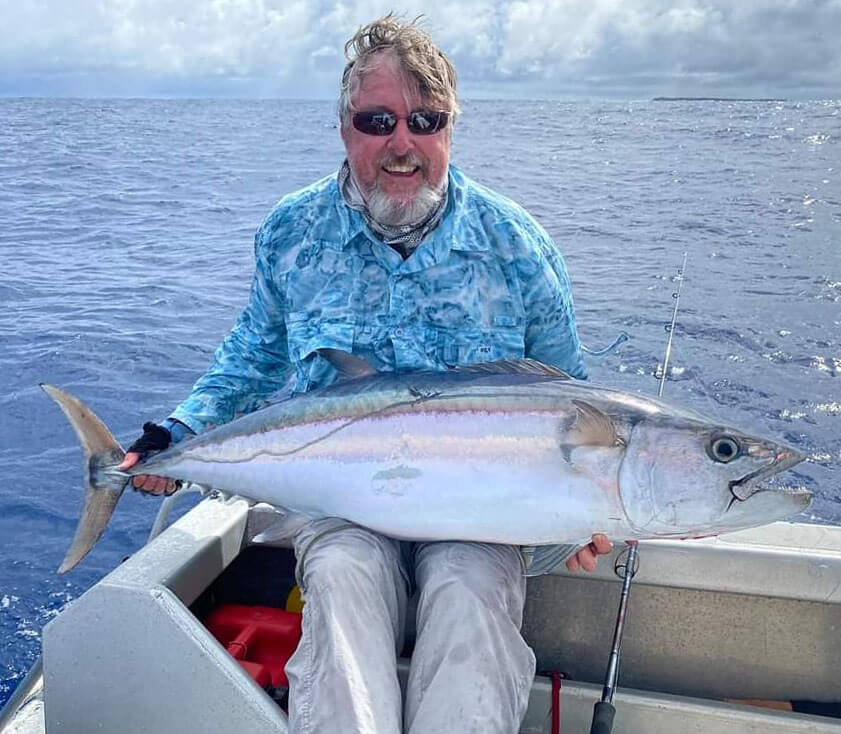
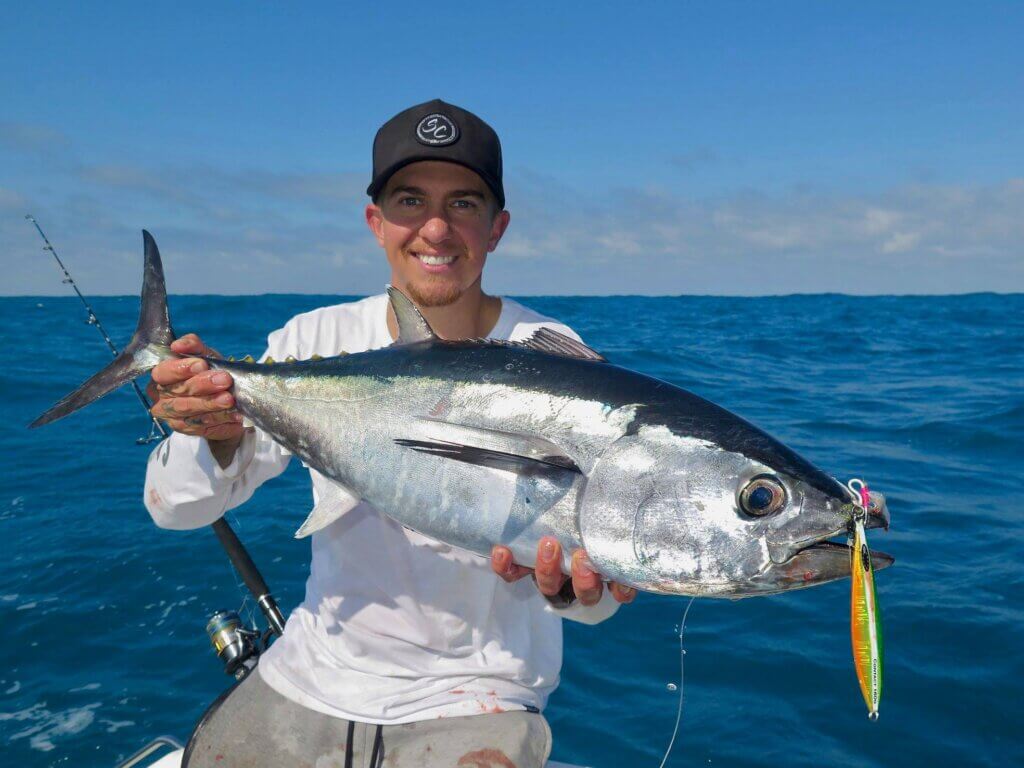
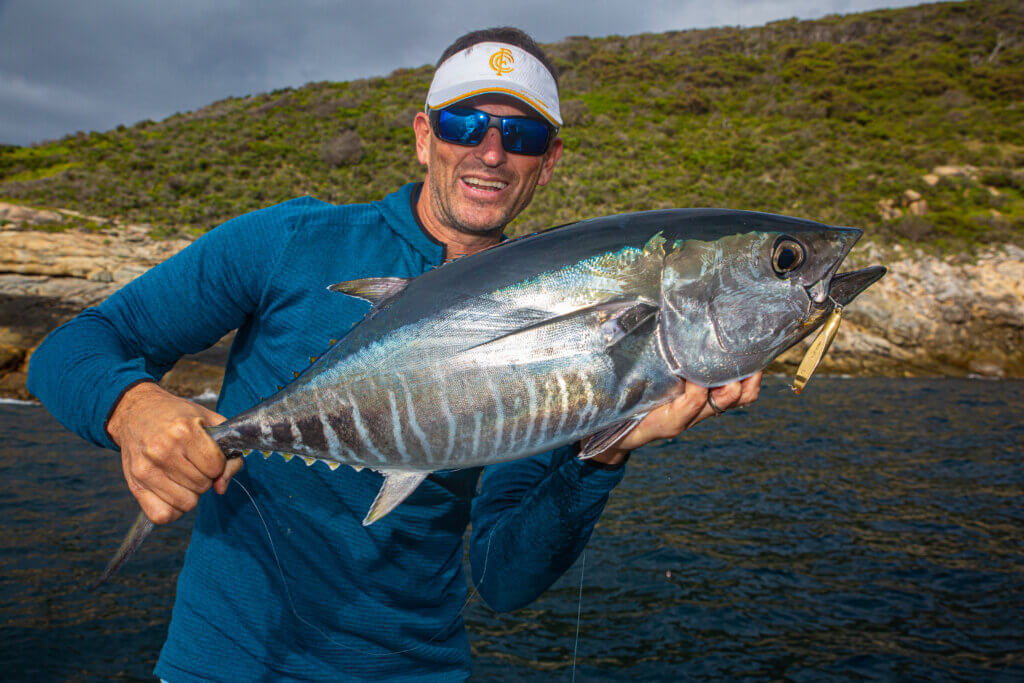
Ashley Prescott with a southern bluefin tuna from the south coast. Picture: Western Angler