The mighty dhufish. They’re WA’s most iconic fish for a myriad of reasons, writes Western Angler editor Scott Coghlan in this week’s exclusive edition of Scott’s Species. Continue reading “Scott’s Species – dhufish, a WA fishing icon”
Tag: Scott Coghlan
Scott’s Species – barramundi, a wonderful estuarine and inshore sportfish
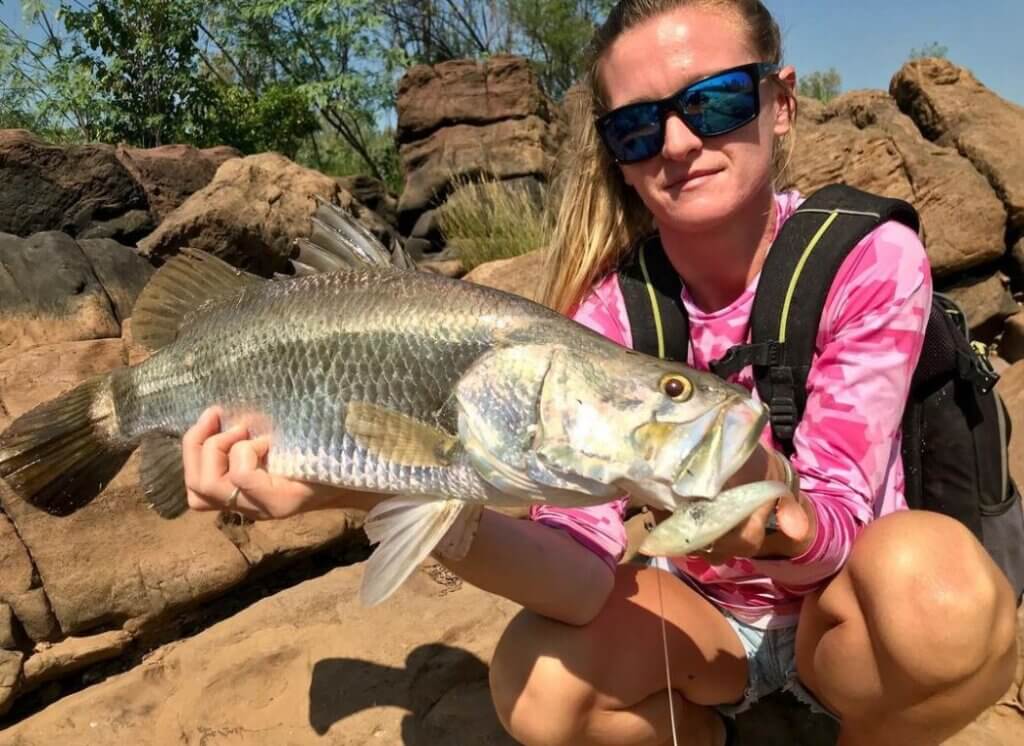
Barramundi are an iconic species of northern Australian waters, encountered from Exmouth north. An estuarine and inshore species that can survive in both freshwater and saltwater, all barramundi begin life as males and become females as they mature, writes Western Angler editor Scott Coghlan in the latest edition of Scott’s Species.
Species: Barramundi, Lates calcarifer
Eating: 4 stars
ID: Concave head, silver sides, large paddle tail.
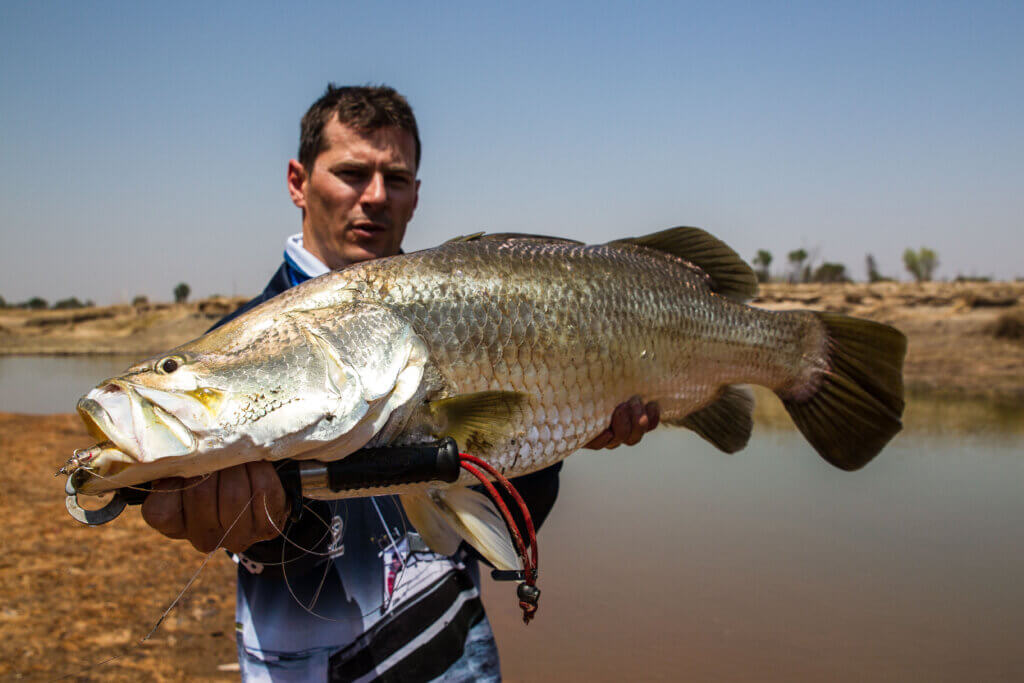
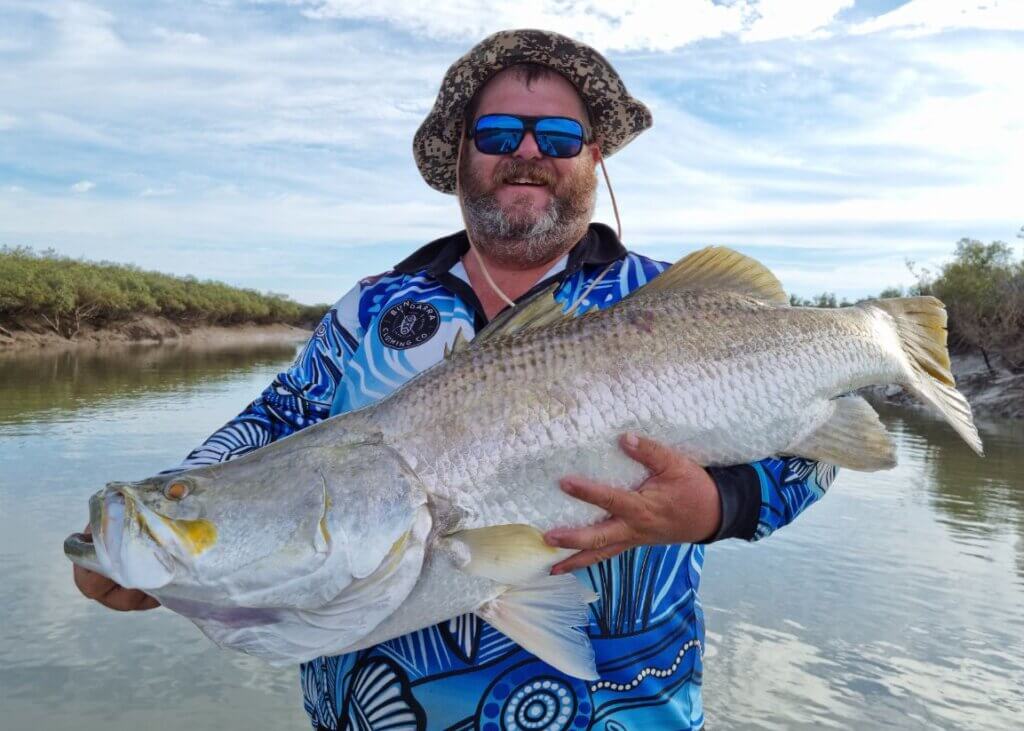
A barramundi exceeding 40kg has been caught from Lake Tinaroo in Queensland. However, they are generally measured by their length and a trophy barramundi is anything over the magical 1m mark.
Barramundi are normally encountered in the tidal rivers in WA’s north, but can also be found in freshwater billabongs, and are a prized catch on lure or bait.
Prime time for barra is just before or after the wet season, when they are more active in the warm water.
Many anglers fish for barra on dropping tides, as these concentrate the bait and therefore identify areas likely to produce fish.
Dead baits are good when it comes to tempting barra, but are prone to being taken other less desirable species like catfish.
Lures are effective, especially when fished around structure as barra love to sit close to rock or timber snags and ambush prey.
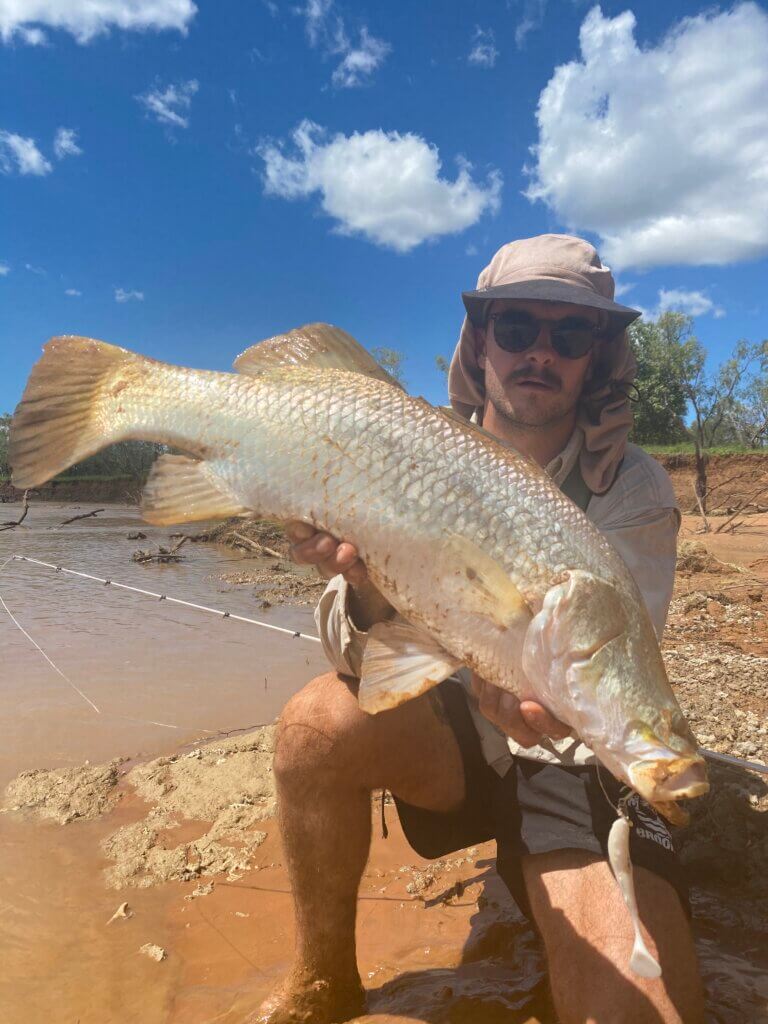
Minnow lures work well, cast or trolled, and soft plastics and vibes dropped around snags can also be very productive.
Barra will often follow lures for quite some time before striking and it pays to work lures slow and erratically.
At night, slowly working ‘fizzers’ along the surface can be very exciting as the barra will crash the lure without warning in the darkness.
Likewise, surface poppers can also work very well at times and the thrill of the strike is special.
Once hooked, barramundi will take to the air repeatedly and put on a spectacular show.
Tackle does not need to be heavy for barramundi, with 7kg-10kg line usually sufficient, but a stronger leader needed.
Many anglers prefer baitcasting outfits to spinning tackle, because of the increased accuracy of casting.
Impoundment fishing for monster barra is popular on the east coast and could soon take off in WA.
Lake Kununurra, originally part of the Ord River, has been heavily restocked with barra in recent years in a project supported by the Lake Kununurra Barramundi Stocking Group, Department of Primary Industries and Regional Development, North Regional TAFE — Broome and Recfishwest.
Now, many of these fish are measuring more than 1m.
There have been a number of big fish caught in the lake and this fishery should only continue to improve in the coming years.
Some of the more highly-regarded rivers for barramundi include the lower Ord, Fitzroy and Keep, but there are countless systems through the Pilbara and Kimberley that hold them in varying numbers.
There are several charters that run extended trips into the Kimberley to target barra, and there also a number of specialised experienced barra fishing guides in northern WA.
Scott’s Species – black bream, an estuarine and river favourite
At south coast estuaries and rivers, you’ll often find Western Angler editor Scott Coghlan with his light tackle set-up working lures and soft plastics for black bream. In this week’s edition of Scott’s Species, the bream enthusiast discusses one of his favourite fish to target — black bream. Continue reading “Scott’s Species – black bream, an estuarine and river favourite”
Scott’s Species – cobia, an enigmatic and powerful sportfish
Often found cruising alongside sharks or manta rays, cobia are a formidable opponent for anglers in WA’s north, according to Western Angler editor Scott Coghlan. In this week’s edition of Scott’s Spots, the well-known fishing writer takes a closer look at the sometime enigmatic species. Continue reading “Scott’s Species – cobia, an enigmatic and powerful sportfish”
Scott’s Species – redfin perch, a lovely-tasting fish albeit a pest
I am not ashamed to say I love redfin perch, writes Western Angler editor Scott Coghlan in the latest edition of Scott’s Species.
Continue reading “Scott’s Species – redfin perch, a lovely-tasting fish albeit a pest”
Scott’s Species – shark mackerel, a slashing surface speedster
In the latest edition of Scott’s Species, Western Angler editor Scott Coghlan discusses shark mackerel. The speedsters don’t get as big as Spanish mackerel, however, sharkies are a great sportfish in their own right and offer some thrilling fishing in WA! Continue reading “Scott’s Species – shark mackerel, a slashing surface speedster”
Scott’s Species – queen snapper, an eye-catching hard-fighter
For Western Angler editor Scott Coghlan, queen snapper are an awesome species to target for a host of reasons. Scott takes a closer look at queen snapper, and their eye-catching blue and yellow striped colouration, in this week’s edition of Scott’s Species. Continue reading “Scott’s Species – queen snapper, an eye-catching hard-fighter”
Scott’s Species – King George whiting, a fish fit for royals
Named after Albany’s King George Sound, King George whiting are an absolute favourite for inshore southern fishers, writes Western Angler editor Scott Coghlan in this week’s edition of Scott’s Spots. Continue reading “Scott’s Species – King George whiting, a fish fit for royals”
Scott’s Species – queenfish, a stunning silver speedster
Aggressive and fast — queenfish are a classic northern sportfish, writes Western Angler editor Scott Coghlan in this week’s edition of Scott’s Species. Continue reading “Scott’s Species – queenfish, a stunning silver speedster”
Scott’s Species – bonito, light tackle sportfishing sensation
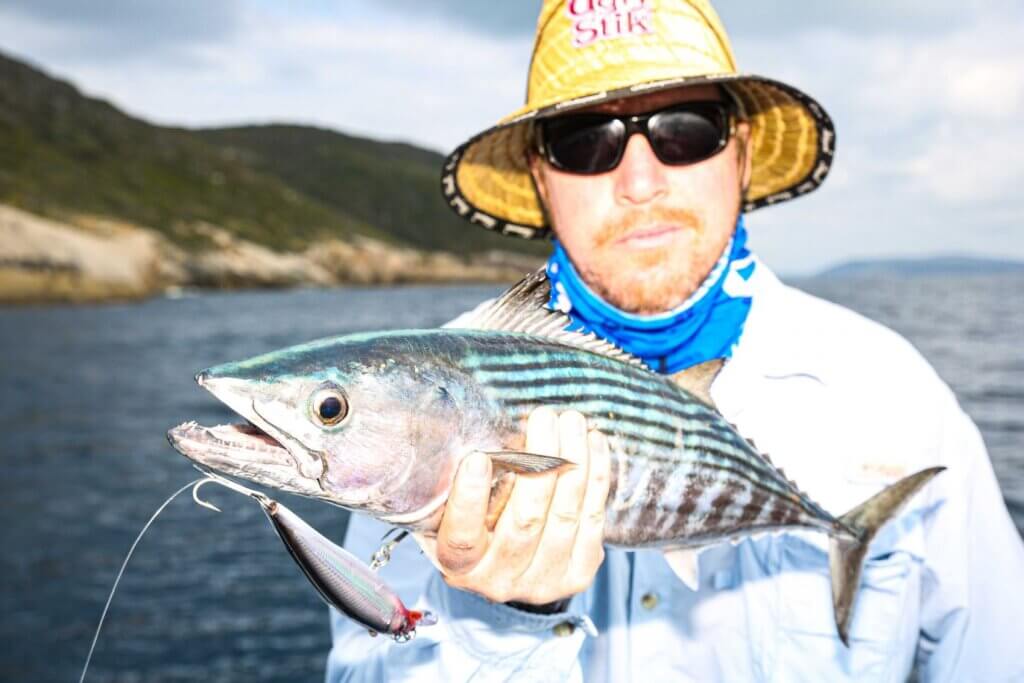
When talking about fun speedsters to do battle with while flicking the light tackle around, Western Angler editor Scott Coghlan finds it hard to look past bonito! In this week’s edition of Scott’s Species, Scott discusses the underrated sportfish.
Species: Sarda australis (Australian bonito), Sarda orientalis (oriental bonito), Cybosardia elegans (Watson’s leaping bonito)
Eating: 3 stars
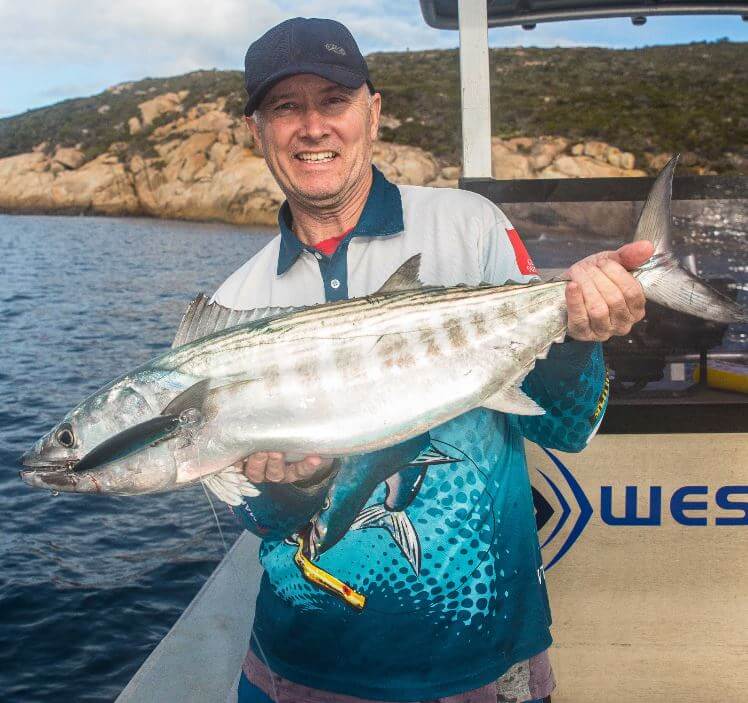
ID: Similar to tuna, but with dark stripes along the side.
Bonito have made a comeback in recent years and I reckon that’s great news!
We haven’t quite got back to the summer metro runs that excited shore anglers a couple of decades ago, but improved numbers in inshore waters offer some hope that they could one day happen again.
Back in their peak days, anglers packed rockwalls and jetties in Perth and cast lures, hoping for a rare taste of land-based game fishing.
There are actually three species of bonito commonly encountered in Australian waters.
The oriental bonito (stripes along upper back) is found on the lower west coast, while the Australian bonito is found on the lower east coast.
The Watson’s leaping bonito (spots and broken bars along upper back) is found from WA’s South West across the top of the country to Queensland.
Oriental bonito are the most common species in WA and are a great little sportfish on light tackle, with plenty of speed when hooked.
They can grow to about 1m long, but most caught are in the 2kg to 4kg range. They are an aggressive species that often hunts in schools and they will hit a variety of baits and lures with gusto.
Large minnow lures and metals will often be taken, as will whole fish baits such as mulies and garfish. They can also be caught on fly.
Heavy gear is not usually needed as bonito are clean fighters and 4kg to 8kg spin tackle is more than sufficient.
They are often caught while trolling bibbed lures near shore or by casting at schools of feeding fish from a boat, but can also be caught from shore in some locations, particularly along the south coast.
The last couple of years have seen big numbers of bonito off Perth, and also along the south coast in autumn, and hopefully this is a sign of things to come.
While chasing salmon last year, we got one bonito off Cheynes that would have been close to 5kg, which is a thumper of a fish!