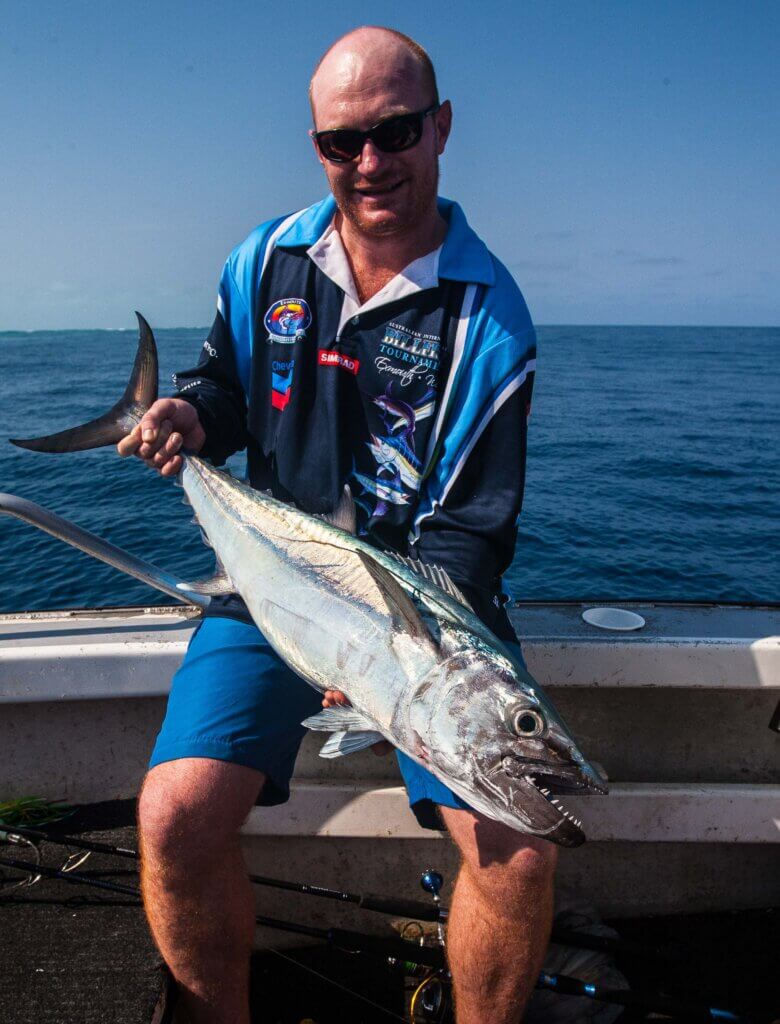
Dogtooth, or doggies as many anglers call them, are one of the most prized gamefish in the world, writes Western Angler editor Scott Coghlan. For many fishos, myself included, doggies are a bucket list capture. Read more about the formidable pelagic species that have fearsome teeth in this week’s edition of Scott’s Species.
Species: Dogtooth tuna, Gymnosarda unicolour
Eating: 3 stars
ID: Prominent lateral line, large teeth.
With a large eye suited to hunting squid and fish in deep water, doggies are usually found around underwater structure such as reefs, drop-offs and ridges.
Sadly for doggie hunters they aren’t common in WA and only a few locations, generally very remote, produce them.
The odd dogtooth gets taken near the Montebellos at the spot called Rankin Bank. Aside from that, you are looking at spots like the Rowley Shoals and Scott Reef.
I’ve fished the Rowley Shoals a couple of times and we’ve only caught a handful of doggies in small sizes.
Some other big hook-ups have suggested doggies, but have ended in tears, and getting them past the sharks is a major problem. Certainly others have had success on them at the Rowleys.
Some of the crew we were with went diving and spotted them right beneath our boat, while the late Hal Harvey picked up a good one from the back of the boat at anchor.
I haven’t fished Scott Reef but it is known to produce good dogtooth, with sharks less of a problem than at the Rowleys.
The other ‘West Aussie’ option for dogtooth are the Indian Ocean Territories of the Christmas and Cocos islands.
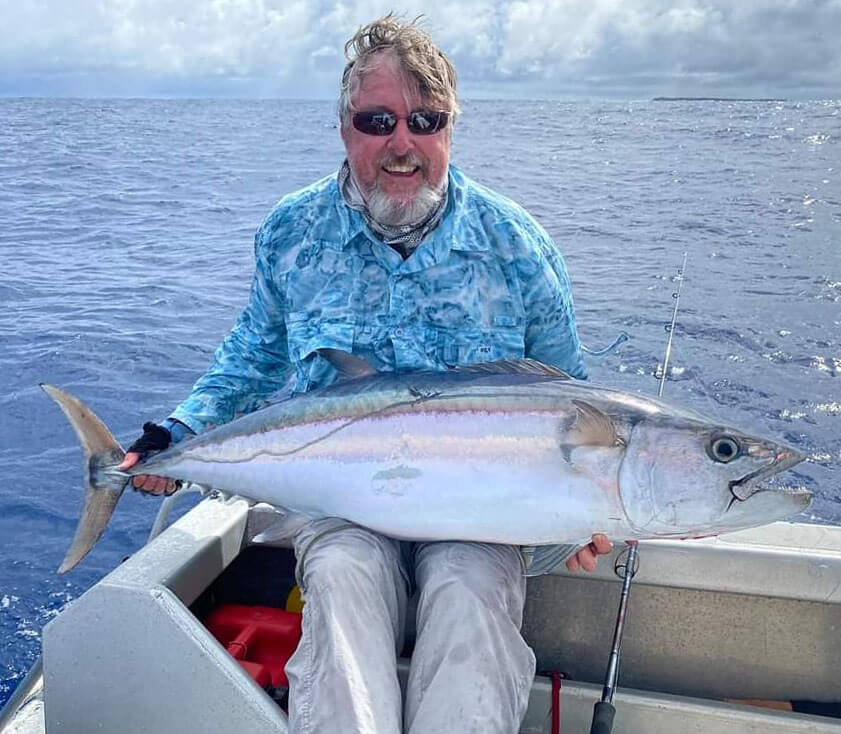
In the current COVID-19 pandemic environment they offer the most accessible ‘overseas’ fishing trips for West Aussies and both hold good populations of dogtooth tuna.
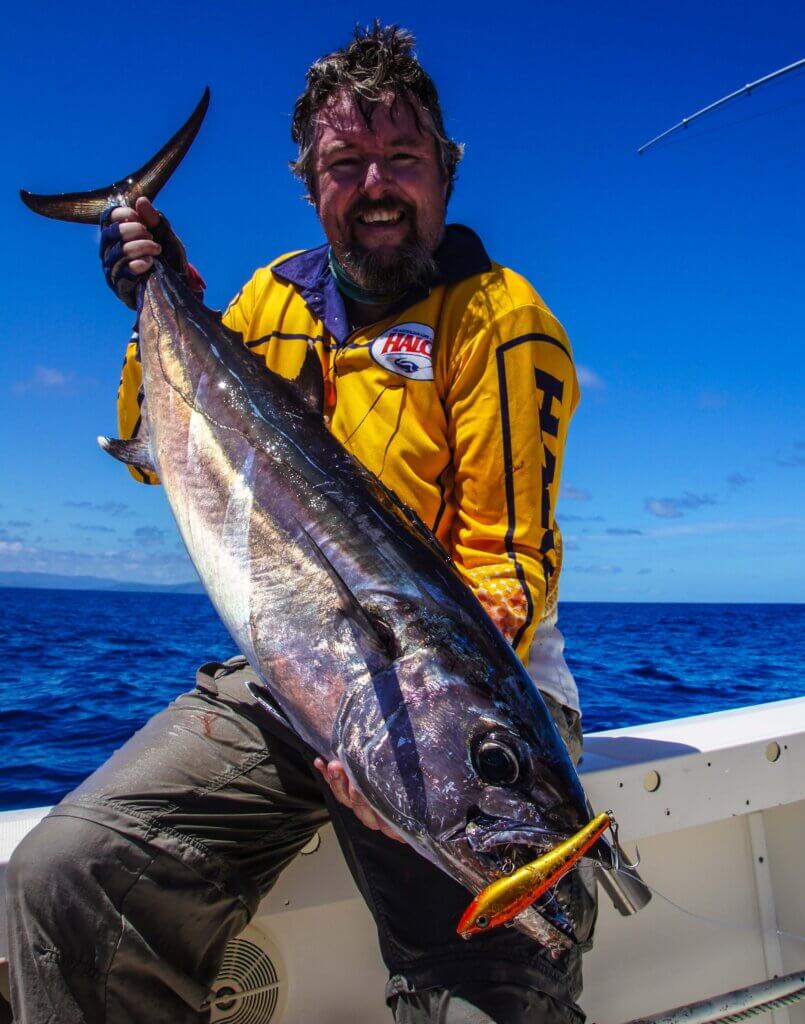
Doggies love to lurk in areas when there is a sudden drop into deep water and both of these locations offer this. I picked up a solid doggie of around 35kg on a surface stickbait at Cocos earlier this year, while casting for giant trevally.
Although we were only fishing in 10m of water, as soon as I hooked it in a big surface strike at the boat the fish headed back over the drop-off and into the depths.
Underwater peaks in very deep water are also noted for producing doggies. The first place I encountered them was in Vanuatu and the biggest one I have seen caught was around 75kg and taken jigging in Fiji.
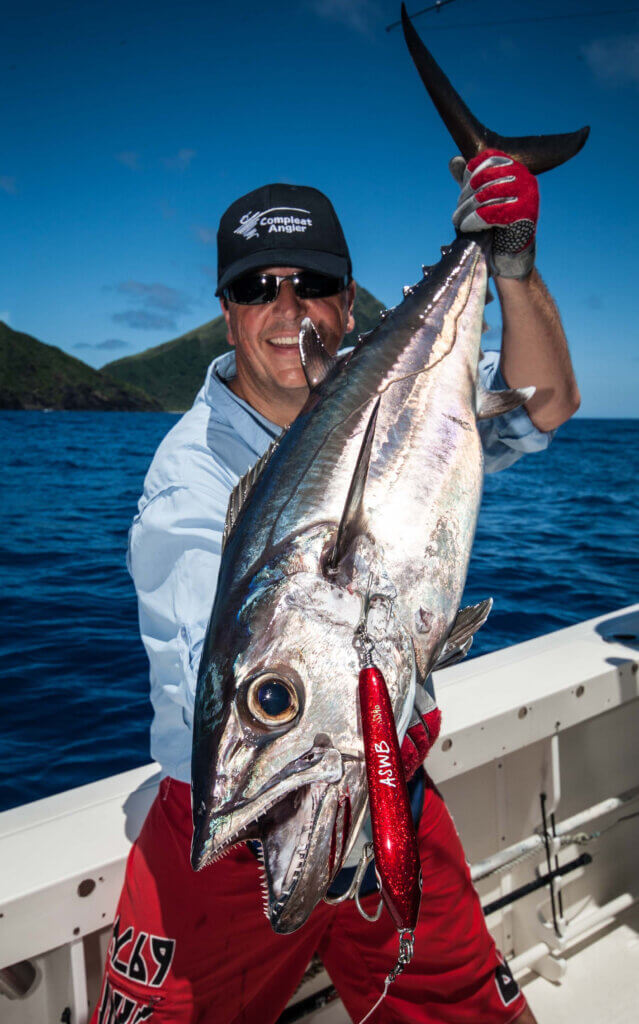
Dogtooth grow to more than 130kg and 1.5m in length and their combination of speed and stamina makes them a favourite with heavy tackle game and sport fishers, although they are also prone to overfishing and can be tough to release as they have a habit of fighting themselves to the point of total exhaustion when hooked.
The handful I have caught have all come to the surface belly up with barely a flicker of life left in them. When hooked they have enormous power and will usually head straight for bottom structure and even smallish fish will test gear and angler, with most dogtooth caught under 40kg.
Doggies will hit a wide range of lures, with metal jigs probably the most popular method because of the depths they tend to frequent. Trolled minnow lures and skirted lures will also work.
As I found at Cocos, at times they will move up in the water column to take poppers and stickbaits, making for very exciting fishing.
Serious game fishing gear is needed, with quality spinning or overhead reels spooled with line of at least 37kg in strength recommended. Dogtooth are rarely an accidental capture and are usually caught by anglers specifically targeting them.