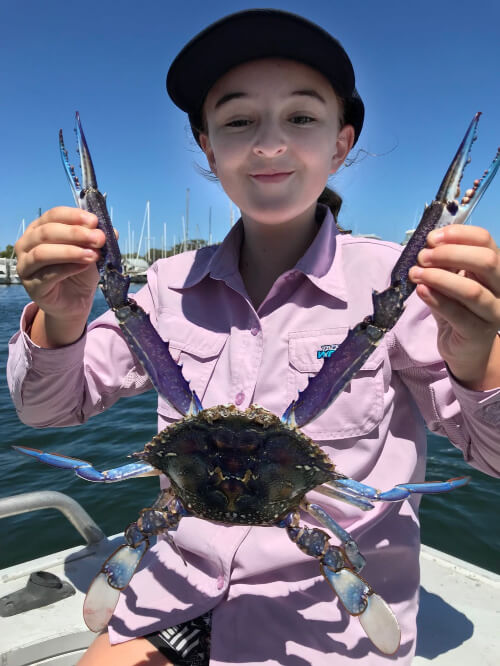
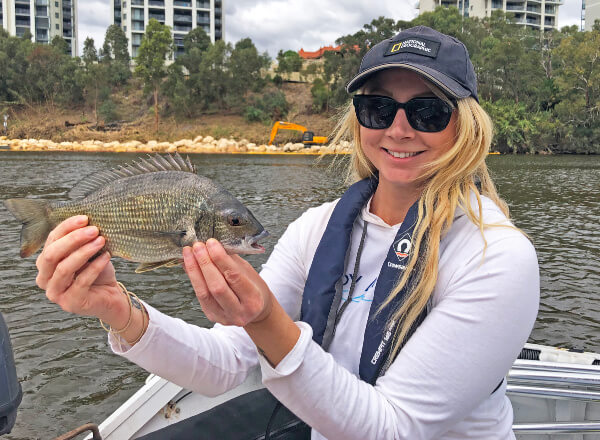
For Perth’s legions of crabbing enthusiasts, it is small consolation the Department of Health (DoH) has finally lifted their health advice around consuming fish, crabs and other shellfish from large parts of the Swan-Canning system almost two months since the toxic algae Alexandrium has been detected at levels that warrant a health alert.
For the last six months, many Perth fishers have effectively been hit with a fishing closure in large parts of the middle and lower Swan and Canning rivers due to high levels of the algae.
Starting in mid-December the DoH issued a series of alerts warning people not to eat fish, crabs and shellfish from large sections of first the Swan and then later the Canning as “ingestion of toxins produced by the microscopic algae Alexandrium could produce a type of poisoning known as paralytic shellfish poisoning (PSP).”
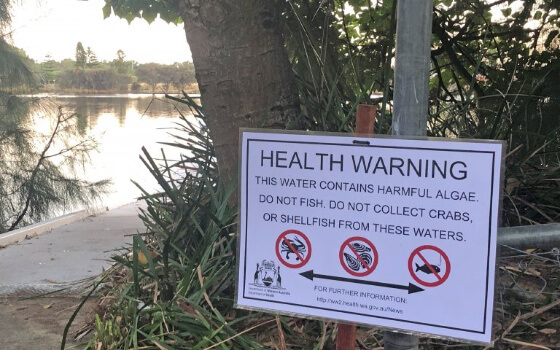
While there are still a few crabs around, the prime months for targeting the Swan’s famously big blue swimmer crabs are unfortunately well and truly behind us. This is the second successive year elevated levels of Alexandrium have substantially disrupted summer crabbing activities in what is the metro’s favourite fishing playground – the “jewel in the city’s fishing crown” as WA angling journalist Scott Coghlan recently described it.
In both years, the strategy to manage these algal blooms can be summed up as “monitor algae levels and wait for late autumn rain to come to flush the algae out of the system.” While Recfishwest welcomes all the sampling that has occurred over the last six months, there is a pressing need for management to do more than simply wait for winter rain. Any resource management plan worth its salt must address the needs of its stakeholders – the river is something we should all be able to enjoy and it is simply not good enough that the recfishing community is not able to access a large section of the river during the peak fishing season.
A more proactive approach required
Recfishwest wants to see a much more proactive approach to the management of the Swan-Canning system with a framework that doesn’t lock us out of the fishery for months at a time – particularly if these blooms are going to become more frequent thanks to environmental change and predicted lower river flows. An open review of the way the sampling results inform the issuing and removal of health warnings needs to take place and a much more defined and transparent set of management actions linked to agreed trigger points for algae levels needs to be developed.
Reopening Cockburn Sound to recreational crabbing
If large parts of the Swan and the Canning River become off limits for crabbing for significant periods of the year, fishers are going to need somewhere they can go and re-opening Cockburn Sound is an obvious option that should be progressed as a matter of priority. We have been told the process to buy-back commercial crab fishing licences in Cockburn Sound following management changes announced in November, is progressing, however, the impact Alexandrium is having on Swan River crabbers provides a compelling reason to fast-track this process.
Blue swimmer crabs are the number one species targeted by recfishers and the Swan-Canning system is one of the State’s most important rec fisheries. Giving recfishers access to crabbing in the Sound again would go some way to offset the loss of access to the Swan and Canning as a result of Alexandrium and would demonstrate a much better management approach than simply praying for rain.