Fishing for Science – Pilbara anglers powering research

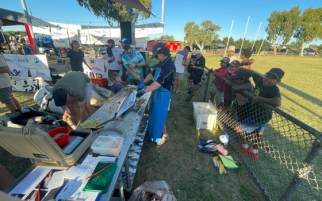
Pilbara fishers played a hands-on role in fisheries science at two of the region’s biggest comps – the Dampier Classic and Mack 10K in Onslow – through our Fishing for Science program.

The idea is simple but powerful – anglers donate their catches at the weigh station, and our team records vital data and samples. At this year’s events, that meant more than 150 Spanish mackerel provided for research – adding to the 1,000-plus fish sampled across Pilbara tournaments over the past five years.

Why it matters

Working alongside DPIRD scientist Paul Lewis and Fisheries Management Officer Liv Rynvis, we collected otoliths (ear bones), genetic samples, and measurements to reveal fish age, growth, feeding habits and stock structure. This information feeds into DPIRD’s next mackerel assessment, giving researchers a clear picture of Pilbara mackerel stocks by comparing recfishers’ catches with commercial samples.

This knowledge is gold for managing our fisheries – helping track recruitment, maturity and age structure to ensure healthy stocks for the future.

Learn more about our Fishing for Science program here.

Check out the video below to see the kind of work that goes into our Fishing for Science program from the recent MACK10K competition!

Fishing for Science program now flourishing

Ashburton Anglers Secretary Suzanne Wilson said the competitors’ willingness to learn more scientific details about Spanish mackerel is gathering steam each year.

“Each competitor receives a team pack that has scientific details of the fish being caught from the previous year and we now have youngsters and adults easily recognising what fish are male or female, so it’s great to see this keen interest in fishers wanting to learn more,” said Suzanne.

“A few years ago around a quarter of fishers would donate their mackies for sampling at the MACK10K, now it’s more than half of them – fishers are happy to give back to a program that works for a species that provides memorable fishing experiences.”

More than just science

Fishing for Science isn’t only about data – it’s also about community. At both events, we ran kids’ fishing clinics and saw the social and cultural value fishing brings to Pilbara towns was once again joyfully highlighted and celebrated.

Recfishwest CEO Dr Andrew Rowland said, “ What stood out this year was the teamwork – anglers, Recfishwest and DPIRD working shoulder-to-shoulder around the sampling table. It’s a genuine example of community, Government and industry pulling together for the future of WA fishing.

“Tight-knit communities, healthy fish stocks, kids fishing clinics and strong partnerships – these all help make fishing in WA so special. With Woodside Energy’s support, Fishing for Science bridges the gap between anglers and researchers for the benefit of everyone.”

Mackerel mayhem: record-breaking catches and samples collected at MACK10K

Ashburton Anglers annual MACK10K competition is always jam packed with Spanish mackies, but 2025’s competition has showcased the Pilbara as a powerhouse for these predators.

The vibrant coastal town of Onslow came alive from 23-24 August for the competition, and this year’s event marked a significant milestone – not only due to a surge in participation and catches, but also the number of fish samples donated to our Fishing for Science program.

A record-breaking 100 boats and 328 keen competitors took to the waters, with the adults landing 212 Spaniards and the juniors catching an additional 33 across the two-day competition, a promising sign for the future of this popular competition.

As a result of more fish captures and the backing of the Pilbara fishing community towards our Fishing for Science program supported by DPIRD and Woodside North West, a record 133 Spanish mackerel catches were kindly donated for sampling.

Our Fishing for Science team assisted DPIRD’s Research Scientist Paul Lewis and Fisheries Manager Liv Rynis collecting otoliths and genetic samples from each fish and record the weight, length, gender and maturity stage.

Senior Operations Officer Sam Russell said, “Across the two days we had more Spanish mackerel sample donations than we’ve ever had at any WA fishing competition, so it’s great to see a growing eagerness from the community in wanting to do their part for a better scientific understanding of this species.”

The finalised data will help analyse the health of Spanish mackerel stocks directly informing assessments in the Pilbara Management Area.

“We also had 50 kids enjoying themselves at the Healthway Kids Fishing Clinic run in partnership by Recfishwest and the Club, so hopefully these youngsters turn into adult competitors at the MACK10K down the track,” added Sam.

It might not look pretty, but these donated Spanish mackerel samples are vital for gaining a better understanding of this cherished species off the WA coastline, with our team assisting DPIRD in collecting the otoliths and belly samples from each fish.


Some of the highlights from our jam-packed Healthway Kids Fishing Clinic!


Big fish = big paydays!

With impressive prizes up for grabs across 17 categories, it was John Palermo aboard On The Chew with his 30.52kg beast that took home the whopping $20,000 payday for the biggest overall mackie, with his vessel also taking out Champion Boat Overall with a total of 57.92kg of Spanish mackerel weighed in.

In the junior category, young Macie Gusthart wowed the crowd with a solid 18.08kg Spaniard, just edging out strong junior contenders Blake Gibson and Blair Fitzgerald, with both assisting each other to land a 17kg fish.

Cause and effect! John Palermo’s 30.52kg Spaniard landed him a $20,000 payday!

Click here to see all results from the 2025 MACK10K.

“A big thanks to all competitors and the Ashburton Anglers Club this year for their ongoing support in Fishing for Science and we always look forward to this landmark event on the Recfishwest calendar, we’ll see you in 2026,” said Sam.

Speedy Spanish mackerel shine for science in Pilbara fishing comps

Everything about Spanish mackerel screams aggression, speed and strength. 

These dynamic pelagics can reach speeds of 50kmh chasing down prey, launch many metres into the air hitting lures and can grow up to 40cm in their first year eventually reaching up to a whopping 50kg! 

This combined with their excellent table quality makes it little wonder these amazing fish are such a popular species and were at the forefront of two recent cracking Pilbara fishing events – Munro’s Mack10k run by the Ashburton Anglers Club and King Bay Game Fishing Club’s Dampier Classic. 

Due to their fast growth rates and predator-evading speed, Spaniards remain a relatively abundant species in WA. 

However, it’s important to keep tabs on mackerel stock numbers as they have declined in other parts of the country, such as in Queensland. 

Subsequently, the Recfishwest Fishing for Science team was at both events working with DPIRD research scientist Paul Lewis and fisheries manager Liv Rynvis, collecting biological samples taken from mackerel caught by competitors. In return, the team offered a fileting service for those providing samples from fish they had caught in the competition.

Recfishwest’s Fishing for Science program, supported by Woodside North West, is a community engagement program that enables local communities to better understand scientifically the fish species that underpin prized fishing experiences.

CHECK OUT OUR MACKEREL FACTSHEET BELOW FOR SOME INTERESTNG NUGGETS ABOUT THESE COOL FISH! 

Ageing ear bones  

One of the key parts of the fish for Recfishwest Senior Operations Officer Sam Russell and Operations Officer Levi De Boni were their earbones or their “otoliths” to give them their scientific name. 

The otoliths when examined under a microscope reveal the age of the fish by displaying growth circles like the rings in a tree. Understanding the age of fish in a population is critical information to ensure they are managed sustainably.  

The otoliths and other parts of the fish were provided to DPIRD fisheries scientists to assist in their ongoing stock assessments of Spanish mackerel in WA.  

Between them, Sam, Levi, Paul and Liv took the otoliths from 93 mackerel kindly donated by participants in both competitions over the course of six days’ fishing.  

Operations Officer Levi De Boni carefully removed the ear bones or “otoliths” as seen in this image from 93 Spanish mackerel across both competitions, which will be analysed to determine the age of each fish donated for sampling to the Fishing for Science team.

If that didn’t keep the pair of them busy enough, they also managed to squeeze in running a couple of kids fishing clinics at each competition, which went down brilliantly with the kids who took part and their grateful mums and dads.  

As Sam reflected, all their efforts were greatly appreciated and welcomed at both events by both clubs. 

“It was an absolute pleasure for Levi and I to participate in these events in our Fishing for Science capacity,” said Sam. “They are such well-run events and clearly are a cornerstone of both Dampier and Onslow’s fishing social calendar.  

“It was so heartening to get such an enthusiastic response for the sampling work we were doing. We had many good and interesting conversations with the guys and some fascinated kids around the filleting table. 

“What really stood out to us was just how much people were interested and cared about the fish they caught – and we just have to give a massive thanks to all who contributed and of course, both Ashburton Anglers and King Bay Game Fishing Club for looking after us so well. We can’t wait to come back next year.”  

Anglers donate big mack sample haul at Onslow Mack10k!

With 78 boats brimming with 266 competitors all hoping to catch the biggest Spanish mackerel at the recent MACK10K competition in Onslow – our Fishing for Science table was jam-packed with macks!  

The annual competition, hosted by the Ashburton Anglers Fishing Club, attracts scores of avid fishers who travel from far and wide across WA to the coastal Pilbara town, with its pristine waters providing the perfect playground for competitors and for various mackerel and billfish species to thrive.  

With impressive prizes up for grabs across more than 17 categories and with Recfishwest once again working in collaboration with DPIRD Research Scientist Paul Lewis, our crew collected scientific data from dozens of Spanish mackerel that were brought to the weigh-in station. 

Thanks to the contribution of the friendly and helpful competitors, our Fishing for Science program, supported by Woodside North West, collected data from a whopping 76 Spanish mackerel, including their weight, length, condition, sex and maturity stage.  

“The number of Spanish mackerel samples collected for Fishing for Science at this year’s MACK10K is the most fish donated since the Fishing for Science program was initiated, so a huge kudos to the Onslow locals who are clearly passionate about helping us better understand this species,” said Recfishwest Senior Operations Officer Sam Russell. 
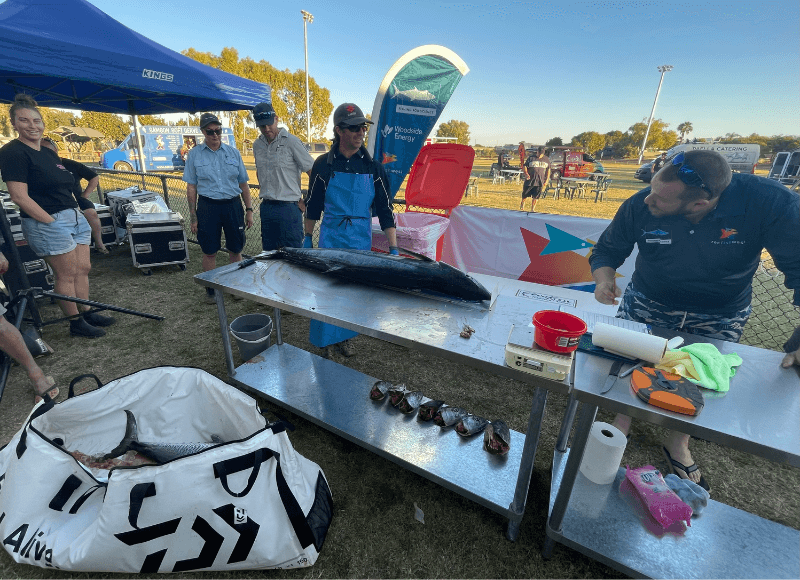
DPIRD’s Paul Lewis and Recfishwest Operations Lead Matt Gillett took samples from 76 Spanish mackerel across the 2023 MACK10K competition, which was the most Spanish mackerel donated since the Fishing for Science program started.


With top prizes like this on offer at the 2023 MACK10K along with spectacular fishing opportunities it is no wonder 266 competitors had a crack in the comp this year!

In addition to our Fishing for Science program, DPIRD’s Paul Lewis took the otoliths from the 76 sampled fish on the filleting table for further scientific analysis. The finalised data will then be used in conjunction with commercial catch data to provide a clearer assessment of the Spanish mackerel stocks in the Pilbara Management Area.  

“The biggest mackerel caught this year at the MACK10K (23.90kg landed by John Higgens) would be around 14 years old and that is normally the maximum age we see from Spanish mackerel each year at this competition from analysis of the otolith bones,” said Paul.  

“We consistently see a strong class of fish every third year and Spanish mackerel reach legal size within about two years. 2019 was a particularly strong recruitment year for Spanish mackerel to thrive off the Pilbara coast and we thankfully saw that flow through to 2022 and 2023.”  

A big Recfishwest thanks to the Onslow fishing community and Woodside North West who strongly support our Fishing for Science program, Paul Lewis who worked tirelessly to collect the data and the Ashburton Anglers for their hospitality during this great annual competition.   
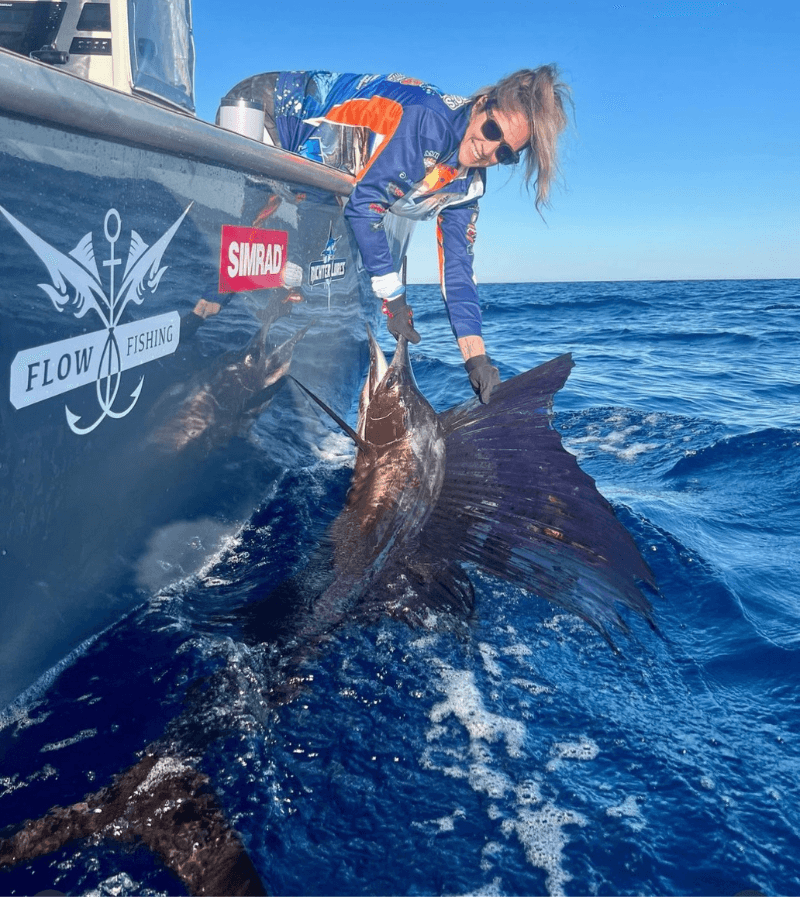
“I thought this was supposed to be a mackie competition?!” said Zoe Moon after landing her first sailfish during the 2023 MACK10K, which saw plenty of impressive billfish landed. Photo credit: Chris Tanti.


Onslow fishing community gets hooked on Fishing for Science

Recfishwest recently had the pleasure to attend the 2022 Munro’s MACK10K competition in Onslow to run our Fishing for Science program – and the mackies came thick and fast for our sampling table!

The annual competition, hosted by the Ashburton Anglers Fishing Club, pulls in hundreds of passionate fishers from across the state, with impressive prizes on offer across more than a dozen challenge categories.

The 2022 Munro’s MACK10K fishing competition had generous prizes on offer! Make sure you check out the Ashburton Anglers Facebook Page for more details on this great annual event.

Working in collaboration with Paul Lewis from DPIRD, our Recfishwest staff were directly involved in gathering data from Spanish mackerel brought into the weigh-in station from 233 competitors across 69 boats.

Thanks to the contribution of the friendly local anglers, our Fishing for Science program collected data from more than 60 mackerel. This included their weight, length, condition, sex and maturity stage.

CHECK OUT OUR FISHING FOR SCIENCE PAGE HERE

Not only did our Recfishwest Operations Officer Sam Russell also take belly samples from each fish for future research, but he was also elected as “resident fish filleter” for the competition! Sam sliced and diced his way through plenty of mackerel for several hours straight each night, before handing fillets out to grateful members of the community from anglers kindly donating their impressive catches.

In addition, Paul from DPIRD  took the otoliths from the 61 sampled fish donated by the competitors to determine their age, with the finalised data to be used in conjunction with commercial catch data to provide clear assessments of the Spanish mackerel stock in the Pilbara Management Area – so a win-win for the local community, DPIRD and the future of these spectacular pelagic powerhouses.

Recfishwest’s Sam Russell and DPIRD’s Paul Lewis (pictured) received a great response for the fish sampling activities for the Fishing for Science program, taking samples from more than 60 fish.

“Thanks to the fantastic response and keen interest of the Onslow fishing community who are just as passionate as we are about fish sustainability and research, Fishing for Science is a great way for fishers to learn more about the fish they love to catch while contributing toward the collection of data that will benefit the fishery in the future,” said Recfishwest Operations Officer Sam Russell.

“We need to say a huge thanks to Paul from DPIRD for his tireless sampling efforts and the crew at Ashburton Anglers for their hospitality during this great annual competition. Having a yarn with the locals and participants shows how much they care about the fish being caught.”
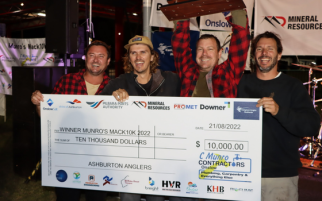
Congratulations to all 15 category winners from the Munro’s MACK10K competition and watch this space for future Fishing for Science initiatives.