The Byssal mussel initiative of which Recfishwest is a founding partner is gearing up to produce the next generation of mussels in Cockburn sound with fresh spat (baby mussels) establishing itself on the farm’s growing lines.
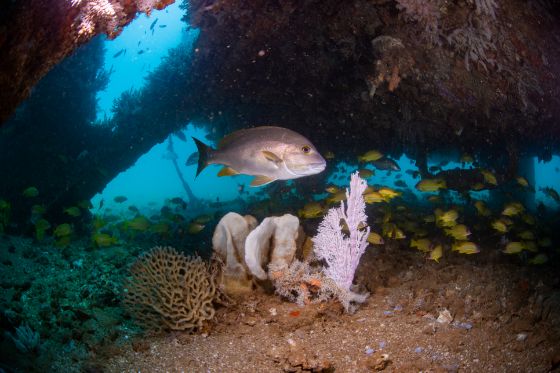
That’s good news for local fishers because the mussels create more productive marine habitat, provide more food for fish and ultimately will support better fishing in Cockburn Sound.
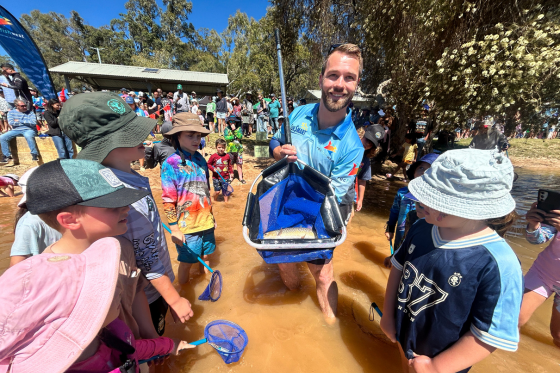
In July, the project reached a major milestone when 20 tonnes of Byssal-grown mussels, around 770,000 in total, were transferred from the farm’s growing lines onto a rock wall at the Australian Marine Complex Common User Facility in Henderson.
Delivered in partnership with Fremantle Ports and DevelopmentWA, the pilot is exploring how mussels can be used to enhance habitat along Cockburn Sound’s rock walls.
There is already evidence that these mussels are providing a food source for fish, squid and crabs, while also filtering seawater.
The next generation musseling in
Following that deployment, the cycle is beginning again.
New mussel spat has now established on Byssal’s growing lines, providing the beginnings of another crop of mussels that can support future projects in Cockburn Sound.
Spat are juvenile mussels that have settled and attached themselves to the growing lines. While they might be small now, last year’s crop showed they should grow relatively quickly and produce another supply of mussels available to put to work improving habitat in the Sound.
Healthy, productive habitat is fundamental to healthy fish populations and great fishing. By creating additional habitat and food for species recreational fishers value, projects like Byssal give us a practical way to invest directly in the places that underpin our fishing experiences.
Recfishwest is one of Byssal’s four founding partners, supporting the initiative as a practical, science-based approach to strengthening fish habitat and supporting better fishing in Cockburn Sound.
Our longer-term vision is to scale up mussel production and identify more opportunities to use the mussels to improve marine habitat across Cockburn Sound.
For us, the measure of success is ultimately how the Sound benefits from the intiative and the people who fish it: more productive habitat, more food for fish and better fishing experiences for generations to come.
And with this new generation of mussels now growing, we’re already working on where they could be put to work next. Watch this space.